Deep-Sea Discovery: Snailfish and New Species Found at Record Depths in NW Pacific Trenches
April 8, 2026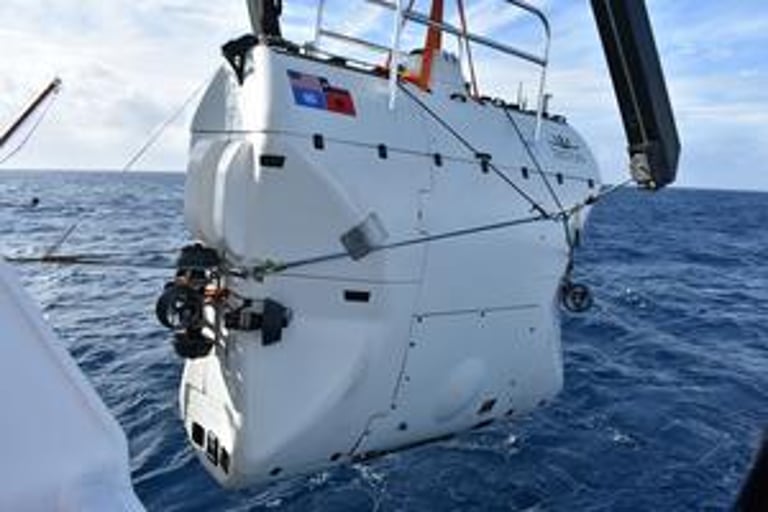

The expedition was a collaboration among the Minderoo-UWA Deep-Sea Research Centre, Tokyo University of Marine Science and Technology, and was funded by Caladan Oceanic LLC and Inkfish.
The survey records at least 108 morphotaxa and notes several notable deep-sea records across the trench system.
This imagery-based approach avoided traditional trawling, focusing on visual observations of seafloor habitats and bait-attending fauna.
Baited landers captured footage of a snailfish feeding at 8,336 meters, marking the deepest observed fish in its natural habitat, and confirmed the widespread presence of the giant scavenging amphipod Alicella gigantea across all three trenches.
A new study published in the Biodiversity Data Journal documents life down to about 9,137 meters in the Japan, Ryukyu, and Izu-Ogasawara trenches, providing the most comprehensive visual baseline to date for abyssal and hadal megafauna in the Northwest Pacific.
The publication details Jamieson et al. as the authors, in Biodiversity Data Journal (2026), documenting faunal biodiversity of the lower abyssal and hadal zones across the NW Pacific trenches.
During the two-month 2022 DSSV Pressure Drop expedition, researchers used non-destructive methods—crewed submersible transects and free-fall baited landers—to study abyssal and hadal fauna.
The study also provides the deepest-ever in-situ observation of a snailfish and documents a broad distribution of Alicella gigantea throughout the surveyed trenches.
Researchers advocate for a non-destructive, imagery-based foundation for future deep-sea biodiversity surveys and emphasize the hadal zone as a largely unexplored frontier.
Overall, the work establishes a visual baseline for abyssal and hadal megafauna in the Northwest Pacific and highlights the hadal zone as a dynamic frontier for deep-sea science.
The team cataloged at least 108 morphotaxa and highlighted notable finds, including an unidentified organism labeled Animalia incerta sedis observed at 9,137 meters.
Dense crinoid meadows at 9,137 meters and the deepest-recorded observations of carnivorous sponges (Cladorhizidae) between 9,568 and 9,744 meters were recorded.
Summary based on 3 sources
Get a daily email with more Science stories
Sources
Ocean News & Technology • Apr 7, 2026
New Study Unveils Rich Biodiversity in Japan’s Deepest Ocean Trenches - environment coastal & offshore
Ocean News & Technology • Apr 7, 2026
New Study Unveils Rich Biodiversity In Japan’s Deepest Ocean Trenches | Ocean News & Technology