Breakthrough Study Links Breast Cancer Cell Programs and Macrophage Subtypes to Chemotherapy Response
May 13, 2026

A large single-cell and spatial transcriptomic study of early-stage triple-negative breast cancer maps cancer-cell programs and macrophage subtypes in the tumor microenvironment that correlate with chemotherapy response.
Researchers trained a 13-gene panel into a machine-learning model designed to predict chemotherapy response before treatment, signaling a path toward personalized diagnostics and therapies.
Stromal compartments are categorized into multiple states, including cancer-associated fibroblasts with interferon and ECM-remodeling signatures, supporting the architectural link between archetypes and tumor microenvironments.
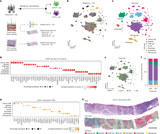
The study profiled over 427,000 cells from 101 patients, classifying tumors into four archetypes based on cancer-cell gene expression and validating these archetypes across datasets.
Archetype composition links to NAC outcomes: ARC2 associates with residual disease, ARC3 with pathological complete response, and ARC2 tends to predict poorer survival while ARC3 aligns with better survival in external cohorts.
Two resistant cell groups emerged: one adapted to hypoxic conditions and another with heightened immune-signaling, with hypoxia-associated cells being particularly aggressive and tied to metastasis.
Immune-state profiling reveals TNBC-specific patterns; Mac-IFN and Mac-lip-C1Q are enriched in complete responses, while Mac-CCL, Mye-prolif, Mac-CXCL, and Mac-ECM are enriched in residual disease, with CD8-Texh linked to pCR and potential LAG3/HAVCR2 targets.
Seven of eight macrophage states associate with chemotherapy response; macrophage subtypes tied to interferon signaling and complement are enriched in complete responders, whereas angiogenesis-associated macrophages are enriched in residual disease.
Clinically, the findings point toward macrophage-targeted therapies and combination immunochemotherapy guided by the transcriptional landscape, though prospective validation is still required.
Across datasets, archetype and metaprogram associations with NAC response are reproducible, supporting biomarker strategies to predict NAC outcomes and tailor therapies.
Thirteen cancer-cell metaprograms show differential abundance between pCR and RD, with M5 and M7 enriched in pCR and M6-HLA higher in pCR-associated cancer-cell subsets, indicating immune-related mimicry and stress responses.
Future work includes validating predictive models in prospective cohorts, exploring chemo-immunotherapy contexts, and studying longitudinal evolution of cancer and microenvironment in relation to response and survival.
Summary based on 8 sources
Get a daily email with more Science stories
Sources
Nature • May 13, 2026
Ecotypes of triple-negative breast cancer in response to chemotherapy
EurekAlert! • May 13, 2026
Study may help predict response to chemotherapy in triple-negative breast cancer
Newswise • May 13, 2026
Study May Help Predict Response to Chemotherapy in Triple-Negative Breast Cancer | Newswise
BIOENGINEER.ORG • May 13, 2026
New Study Sheds Light on Predicting Chemotherapy Response in