Study Reveals Optimal Sleep Duration for Slowing Organ-Specific Aging and Reducing Health Risks
May 13, 2026

A new Nature study links sleep duration to organ-specific aging, showing that both too little and too much sleep accelerate aging across the brain, heart, lungs, and immune system using aging clocks built from multi-omics and imaging data.
Across outcomes, both short and long sleep are associated with a broad set of health risks, including 153 disease endpoints and higher all-cause mortality, underscoring sleep as a modifiable factor with wide health relevance.
Using UK Biobank data from roughly 500,000 participants, researchers built 23 aging clocks across 17 organ systems and found a U-shaped relationship, with healthiest aging around 6.4 to 7.8 hours of sleep.
Genome-wide association studies identified eight loci linked to abnormal sleep duration, with short sleep showing enrichment in brain regions while long sleep loci did not show such enrichment.
The study, published May 13, 2026, is part of the MULTI Consortium, providing context with related references and prior work.
The SleepChart portal offers access to results, code, and summary statistics to enable transparency and replication.
Analysis shows relatively few genetic links to abnormal sleep patterns, highlighting the prominent role of environmental or lifestyle factors in sleep duration and its aging associations.
Genetic analyses reveal distinct architectures for short versus long sleep: short sleep shows broad systemic genetic correlations, while long sleep links more strongly to brain-related traits.
Mendelian randomization suggests sleep disturbances are more plausibly risk factors for disease than diseases driving sleep disturbances, though bidirectional effects can’t be completely ruled out.
The study does not claim a universal optimal sleep window or that sleep directly slows aging; instead, it provides a comprehensive snapshot of sleep–aging interactions.
Long sleep (>8 hours) associates with increased biological aging burden and tends to have brain-centric disease associations, suggesting indirect or compensatory pathways rather than direct causality.
Optimal sleep durations differ by sex across several BAGs, with brain ProtBAG showing strong associations and estimated minimums around 7.7–7.8 hours for females and 7.0–7.7 hours for males depending on organ system.
Summary based on 4 sources
Get a daily email with more Science stories
Sources

Neuroscience News • May 13, 2026
Sleep Duration Linked to Accelerated Aging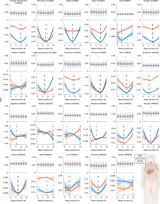
Nature • May 13, 2026
Sleep chart of biological ageing clocks in middle and late life
Nature • May 13, 2026
Sleep linked to slower ageing: huge study pinpoints the right amount
Columbia University Irving Medical Center • May 13, 2026
Too Little Sleep—and Too Much—Associated with Faster Aging