FSU Achieves Breakthrough in Synthesizing Marine Compounds for Cancer Drug Development
May 19, 2026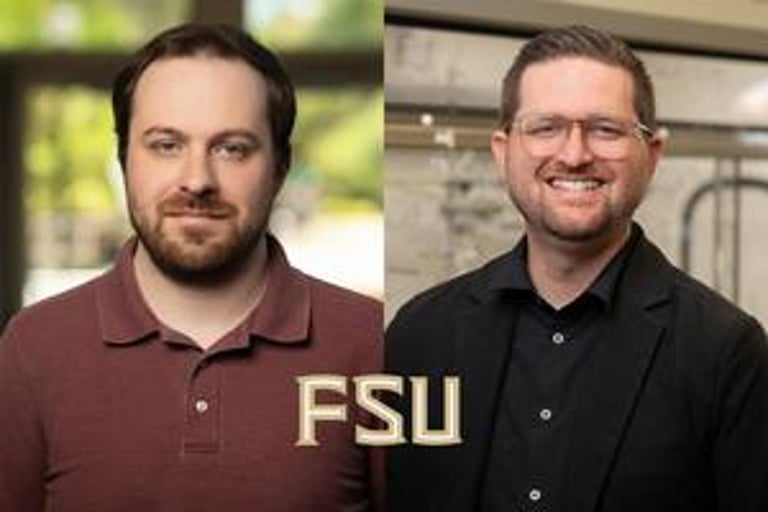

Lead author Zackary Firestone emphasizes that synthetic routes facilitate biological testing and derivative development, moving beyond limited natural sources.
The project, led by Firestone at the Smith Laboratory of FSU, fits into broader efforts in organic synthesis aimed at enabling new small-molecule drug development, with potential cancer applications.
Coauthors Thiago A. Grigolo and Filipe G. Pernichelle contributed to the study, highlighting the role of natural products and synthetic chemistry in expanding medicinal chemistry pipelines, with NIH and NSF support.
Epi-tetradehydrohalicyclamine B, identified in 2019, draws attention for its unique structure and pharmaceutical potential; the team synthesized both molecules in enantiomerically appropriate form to achieve the desired biological activity.
The findings were published in the Journal of the American Chemical Society earlier this year, underscoring the value of synthetic access to marine natural products for medicinal chemistry.
These compounds can inhibit proteasomes, a key mechanism for stressing and killing cancer cells, with implications for treating cancers such as multiple myeloma and mantle cell lymphoma.
This work marks the first successful total synthesis of both compounds, enabling scalable procurement and focused modification for drug discovery.
The synthesis provides sufficient quantities for comprehensive testing and exploration of structural derivatives to improve therapeutic properties and accelerate cancer drug development.
FSU researchers have achieved the first total synthesis of two marine natural products, tetradehydrohalicyclamine B and epi-tetradehydrohalicyclamine B, enabling easier procurement and modification for drug discovery and testing.
Synthetic access reduces dependence on scarce sponge samples and provides larger quantities, while allowing researchers to create derivatives for enhanced activity or properties.
FSU’s legacy in molecular synthesis, connected to historic achievements like Taxol synthesis, frames this work within a broader mission to develop small-molecule drugs for cancer and neurological diseases.
The study, conducted under the Smith Laboratory and published in the Journal of the American Chemical Society, involved collaboration with Joel M. Smith and was supported by NIH and NSF.
Summary based on 3 sources
Get a daily email with more Science stories
Sources

Florida State University News • May 19, 2026
FSU chemists use sea sponge bacteria to create new molecules for drug discovery
Newswise • May 19, 2026
FSU chemists use sea sponge bacteria to create new molecules for drug discovery | Newswise
Mirage News • May 19, 2026
Chemists Harness Sponge Bacteria for Drug Discovery