House Republicans Push for Permanent Ban on U.S. Central Bank Digital Currency
May 19, 2026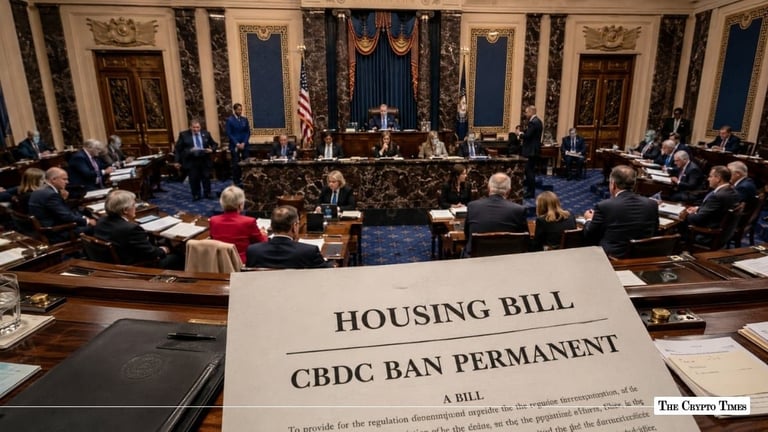

In the Senate, the revamped housing bill is part of a broader package addressing housing supply, affordability, mortgage access, and manufactured housing rules, and it originally included the CBDC prohibition with the 2030 sunset.
If enacted, the measure would constrain Federal Reserve monetary tools and shape the trajectory of U.S. digital-money policy pending Senate action and the administration’s position.
Key players cited include Rep. Warren Davidson, Rep. Mike Flood, House Majority Whip Tom Emmer, Senator Tim Scott, Senate Majority Leader John Thune, and President Trump’s stance is noted.
Representative Warren Davidson and fellow Republicans defend the ban as a safeguard, arguing the current legislation effectively enables a CBDC launch under housing policy pretenses.
Critics warn CBDCs could threaten privacy and enable government overreach, while supporters point to potential financial inclusion benefits, with perspectives from groups like the Human Rights Foundation.
Supporters say a permanent ban protects privacy and prevents surveillance; critics counter that CBDCs could enhance financial inclusion and access to digital services.
Global context shows CBDCs have limited deployment, with only a few countries like Nigeria, Jamaica, and the Bahamas fully launching, while many others run pilots, according to the Atlantic Council.
This limited adoption abroad influences U.S. policy considerations as other nations experiment with digital currencies.
Republican leaders argue the ban is essential to prevent overreach and surveillance, though some critics acknowledge possible inclusion benefits despite privacy concerns.
As of now, a handful of countries are fully using CBDCs, with many more in pilot stages, per Atlantic Council data.
The House Republicans are pushing to make permanent the current temporary ban on a U.S. central bank digital currency (CBDC) by removing the sunset provision set for December 31, 2030, within the revised 21st Century ROAD to Housing Act.
The CBDC debate is framed within broader digital-finance regulation, cross-border payments, and stablecoins, with international frameworks like MiCA highlighted for governance and legality questions.
Summary based on 5 sources
Get a daily email with more Crypto stories
Sources


crypto.news • May 19, 2026
House Republicans seek indefinite block on U.S. CBDC plans
TradingView • May 19, 2026
Republican lawmakers call for permanent CBDC ban as House vote approaches
KuCoin • May 19, 2026
US Lawmakers Propose Permanent CBDC Ban in Housing Bill | KuCoin