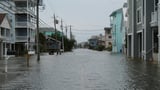
Sea Level Rise Accelerates: Ocean Warming and Glacier Melt Drive Doubling in Recent Decades
May 21, 2026


The analysis reconciles older gravity-based measurements with newer data and incorporates updated community estimates to complete the accounting of sea level rise components.
Advances in observation—satellite corrections, refined land movement estimates from tide gauges, and improved ice-loss estimates for Greenland and Antarctica—help resolve past discrepancies.
A Science Advances analysis (1960–2023) finds heat-driven seawater expansion as the largest contributor to sea level rise at 43%, followed by mountain glaciers (27%), the Greenland ice sheet (15%), the Antarctic ice sheet (12%), and declines in land water storage (3%).
Contributions to sea level rise are characterized by mountain glacier melt at 27%, Greenland ice sheet melt at 15%, Antarctic ice melt at 12%, and land-based water storage changes at 3%.
A detailed sea level budget supports better future-rise predictions and informs mitigation strategies for policymakers and communities.
Since 1993, accelerated glacier melt and polar ice loss have become increasingly important and are expected to continue in the coming decades.
John Abraham of the University of St. Thomas notes that improved instruments and analyses reduce the gap between observed sea level rise and its explained causes.
Global average sea level rise is accelerating, with rates rising from about 2 millimeters per year in earlier periods to around 4 millimeters per year more recently, driven largely by ocean warming and land water storage changes.
Recent measurements attribute roughly the rise to 41% from ocean warming and about 21% from reduced land water storage, reflecting a doubling of the rise rate in recent decades.
Scientists warn that, driven by human-caused climate change, sea level rise is unlikely to stop and will continue for centuries due to ocean inertia and ongoing land ice melt, even if emissions stabilize.
Human-caused climate change is driving an accelerating sea level rise, with new work aiming to close the budget gap between observed rise and inferred contributing processes.
The study, published in Science Advances, brings together researchers from Tulane University, the National Center for Atmospheric Research (France), and partner institutions in France and the United States.
Summary based on 2 sources