Exercise Hormone Irisin Offers Hope for MS Treatment by Protecting Neurons, Study Finds
May 22, 2026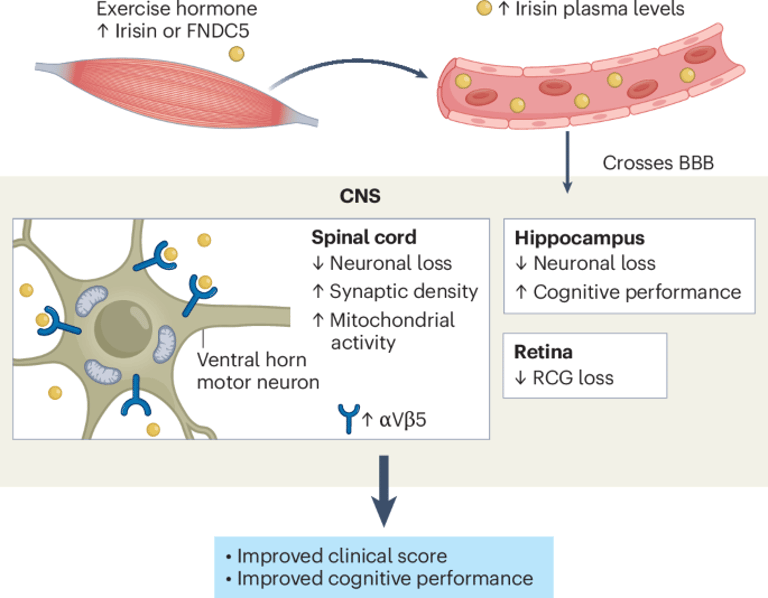

A Nature Metabolism preview reports that the muscle-derived hormone irisin promotes neuronal survival in an inflammation-driven neurodegenerative model relevant to multiple sclerosis.
Irisin, released by muscles during exercise, directly protects neurons and reduces neurodegeneration in a mouse model of MS.
Readers can locate the full article via the DOI and citation framework, with access options and subscription context included.
The study, published in Nature Metabolism in 2026, involves Italian researchers led by Diego Centonze and Alessandra Musella.
Ethics and disclosures note no competing interests from the authors.
Background references on irisin and neuroprotection are listed, including foundational work in Cell Metabolism (2013) and Nat Metab (2021).
Publication details, author affiliations, and acknowledgments indicate support from IRCCS San Raffaele and IRCCS Neuromed in Italy.
The study was conducted by Mass General Brigham and University Medical Center Hamburg-Eppendorf (UKE), with results published in Nature Metabolism, suggesting irisin could be developed as a therapeutic for MS.
Experiments show that removing irisin abolishes exercise’s neuroprotective effects, while adding irisin restores neuronal protection and improves clinical outcomes.
Irisin reduced neuronal loss in the spinal cord, hippocampus, and retina, and preserved synapses and a neuroprotective gene program.
Neuroprotection from irisin acts directly on neurons rather than suppressing peripheral immunity.
Irisin may represent a disease-modifying mechanism in MS, with exercise biology offering therapeutic insights; irisin is a potential target, especially for progressive MS, as part of exercise-related benefits.
Summary based on 2 sources
Get a daily email with more Science stories
Sources

Neuroscience News • May 21, 2026
Exercise Hormone May Protect Neurons in Multiple Sclerosis
Nature • May 21, 2026
Irisin as a driver of neuroprotection in multiple sclerosis