Himalayan Rivers Shifting Faster Due to Warming: New Study Highlights Urgent Water Security Threats
May 24, 2026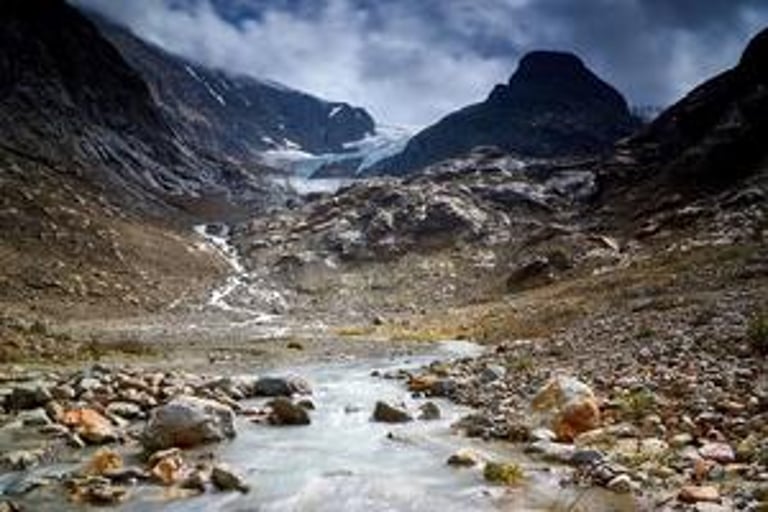

Warming temperatures are driving glacier melt and thawing permafrost in the Himalayas, increasing water and sediment input and weakening riverbanks, which accelerates river dynamics.
Himalayan rivers are shifting course more rapidly as a result of climate warming, with glacier melt and thawing permafrost threatening downstream water security and infrastructure.
Observed river dynamics are directly linked to warming, glacier melt, and permafrost thaw, intensifying sediment transport, flood risks, and erosion downstream.
The Science study was published on May 14, 2026, in Science (Vol. 392, Issue 6799), drawing on 1980–2020 observations of 1,079 river bends spanning about 1,582 kilometers of Himalayan channels.
Using satellite imagery and field work across 1,079 bends and roughly 1,582 km of channels, researchers map migration, bends, cutoffs, avulsions, and shifts in channel patterns in the Himalayas.
A multinational analysis of 1980–2020 across three major Himalayan basins combines satellite data with field observations to assess river movement and related geomorphic changes.
Researchers warn that accelerated Himalayan river dynamics could affect billions who rely on Himalayan water, urging climate-informed planning to mitigate downstream impacts.
A new Science study from May 14, 2026, analyzes how warming accelerates Himalayan river instability from 1980 to 2020, driving faster river movement and channel changes.
The study is led by Professor Chengshan Wang and Dr. Zhongpeng Han, with Dr. Lin Zhipeng, and includes collaborators from multiple institutions.
Affiliations include the China University of Geosciences, Beijing, and Sichuan University, with support from multiple Chinese science foundations and programs.
Overall river migration rates rose about 33% from 1980 to 2020, with freely moving bends nearly doubling (about 97%), and increases in cutoffs, avulsions, and channel-pattern changes.
The findings call for integrating climate-driven river changes into long-term water management, flood control, and infrastructure planning across the Himalayan region.
Summary based on 2 sources
Get a daily email with more Science stories
Sources

SciTechDaily • May 24, 2026
Scientists Warn Himalayan Rivers Are Becoming Increasingly Unstable
EurekAlert! • May 21, 2026
Himalayan rivers are shifting their course faster due to climate warming