Glasgow's Rare Water Voles Relocated to New Habitat Ahead of Construction
May 27, 2026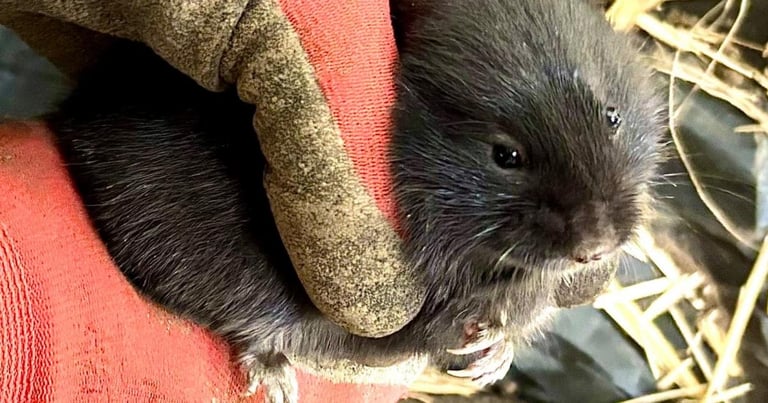

Scottish Water, working with Glasgow City Council, NatureScot, Seven Lochs Wetland Park, and Tetra Tech ecologists, emphasized wildlife protection and close collaboration throughout the project.
The SUDS project, delivered by Caledonia Water Alliance, is planned to finish by next summer, enabling more social and affordable housing development in the area.
Jenny Craig, environmental manager at Scottish Water, highlighted environmental safeguards and local partnerships as drainage improvements proceed for Wellhouse residents.
The relocation creates a nationally significant population and a new habitat intended to connect fragmented vole colonies across the region.
The aim is to establish a connecting habitat to support fragmented water vole populations as part of broader ecological and housing development goals.
Officials describe the population as nationally significant, with hopes the new habitat will link fragmented vole colonies regionally.
One vole received a nickname, Paprika, reflecting the human-interest angle of the conservation effort.
Experts from Tetra Tech, including Julia Ferguson, described Glasgow’s voles as a remarkable urban adaptation and stressed the relocation’s potential to connect fragmented populations.
Ferguson noted the voles’ rarity and their adaptation to urban grasslands away from water, with the relocation aimed at creating connecting habitat for fragmented colonies.
In Glasgow, a rare population of fossorial water voles was relocated to a nearby suitable habitat ahead of drainage works in Wellhouse to protect them during construction.
Ecologists trapped and transferred the voles using careful methods, including empty Pringle tubes to funnel them into transport crates.
These underground-dwelling voles, first found in Glasgow in 2008, favor urban grassy areas over streams and require specialist handling due to their habitat needs.
Summary based on 8 sources
Get a daily email with more World News stories
Sources

Evening Standard • May 27, 2026
Rare burrowing city water voles relocated ahead of drainage works
Oxford Mail • May 27, 2026
Rare burrowing city water voles relocated ahead of drainage works
Gazette • May 27, 2026
Rare burrowing city water voles relocated ahead of drainage works
Bucks Free Press • May 27, 2026
Rare burrowing city water voles relocated ahead of drainage works