Study Suggests Pigeons Use Liver-Based Magnetic Compass for Navigation
May 28, 2026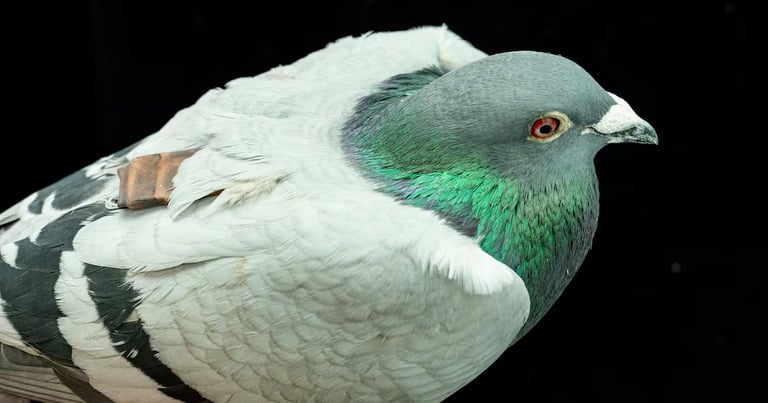

Experts propose that one mechanism may dominate long-distance navigation while another aids in destination finding, with context and precision shaping which is used.
DOI information for the Science article is provided to help readers access the original research and related commentary.
The study intersects with broader magnetoreception debates, acknowledging alternative theories (such as magnetically sensitive molecules in the eyes) and suggesting multiple strategies could coexist across species and contexts.
Some researchers outside the study express skepticism, questioning the causal strength and whether iron in macrophages can meaningfully interact with Earth’s weak magnetic field.
Research involved multiple institutions, including the University of Bonn, University Hospital Bonn, University of Duisburg-Essen, and the Max Planck Institute of Animal Behavior.
Findings could extend to other animals lacking strong cryptochrome-based sensing or operating in low-light, suggesting broader magnetoreception mechanisms.
A new study proposes that homing pigeons have iron-loaded macrophages in the liver that act as magnetic immune cells, potentially forming a compass by linking liver signals to the brain.
Research shows pigeons rely on solar cues on sunny days for navigation, while overcast conditions scramble their magnetic sense, indicating multiple navigational cues at play.
While the liver shows the strongest magnetic signal, other studies have found possible sensing sites like the beak and spleen, and experts caution that more work is needed to confirm the mechanism and its universality across species.
Independent experts find the result plausible but note magnetoreception may involve multiple senses or strategies depending on the task.
Cautious notes emphasize the need for evidence on superparamagnetism’s role and warn that depleting macrophages could affect physiology or stress, potentially confounding results.
Caveats include concerns that liver-based sensing could be confounded by iron intake and that macrophages elsewhere might be affected by the experimental treatment.
Summary based on 13 sources
Get a daily email with more Science stories
Sources

Ars Technica • May 28, 2026
How pigeons exploit magnetic fields for navigation
AP News • May 28, 2026
Pigeon GPS: New clues into how the birds find their way home | AP News
Yahoo News • May 28, 2026
Pigeons may be navigating with their liver, study suggests
Yahoo News Canada • May 28, 2026
Pigeons may be navigating with their liver, study suggests