Hektoria Glacier's Rapid Retreat Marks Fastest Grounded Ice Loss in Modern History
May 4, 2026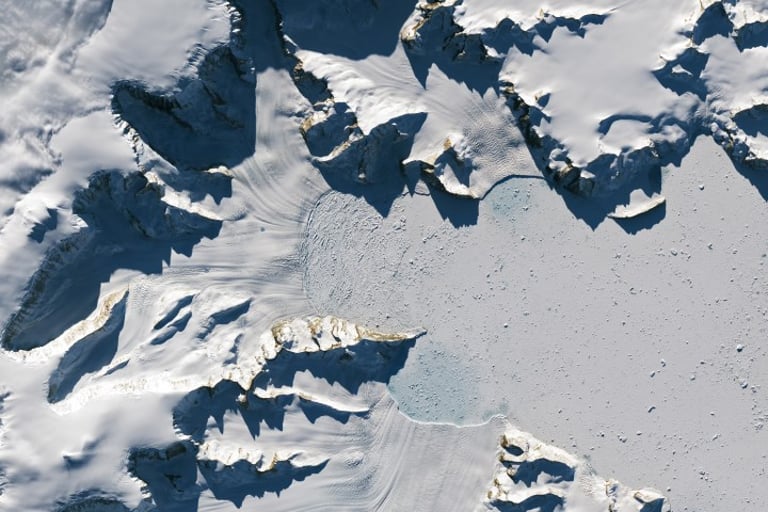

Hektoria Glacier retreated rapidly from January 2022 to March 2023, shedding about 25 kilometers (15 miles) in length, including an 8‑kilometer (5‑mile) two‑month period—the fastest documented grounded ice loss in modern history.
Scientists used remote-sensing data to show that a grounded ice body over a flat bed enabled buoyancy-driven calving of a thick floating ice tongue, driving rapid retreat and contributing to sea‑level rise.
The collapse of Larsen B in 2002 destabilized regional glaciers, with ongoing thinning and retreat; landfast sea ice re-formed in 2011, later broke up, and renewed instability emerged in 2022.
The story underscores the broader relevance for tidewater glaciers on the Antarctic Peninsula and the region’s response to warming, with implications for future coastal environments and sea‑level rise.
Hektoria Glacier’s terminus stabilized after the 2022 austral winter, while Green Glacier kept retreating; experts expect the Hektoria system to slow and possibly transition toward a fjord‑like state rather than rapid, ongoing calving.
New NASA and partner technologies, including NISAR and SWOT missions, are highlighted as valuable tools for monitoring rapid glacier changes and their broader cryosphere implications.
Ice thinning persisted during the 2022 austral winter as revealed by ICESat‑2, with earthquakes beneath the glacier indicating a relatively flat bedrock, forming an ice plain that enabled large‑scale calving.
Naomi Ochwat and colleagues suggest buoyancy‑driven processes could threaten larger glaciers under warming, potentially increasing sea‑level contributions.
The retreat occurred in two stages: an initial loss of ice tongue and grounded ice in 2022, followed by a second stage in 2023 driven by buoyancy after landfast ice embayment broke up in January 2022 due to ocean swells.
Summary based on 1 source
Get a daily email with more Science stories
Source
NASA Science • May 4, 2026
Record-Setting Retreat of Hektoria Glacier - NASA Science