Arctic Icebergs Reshape Seafloor and Risk in Fram Strait Amid Climate Change
June 10, 2026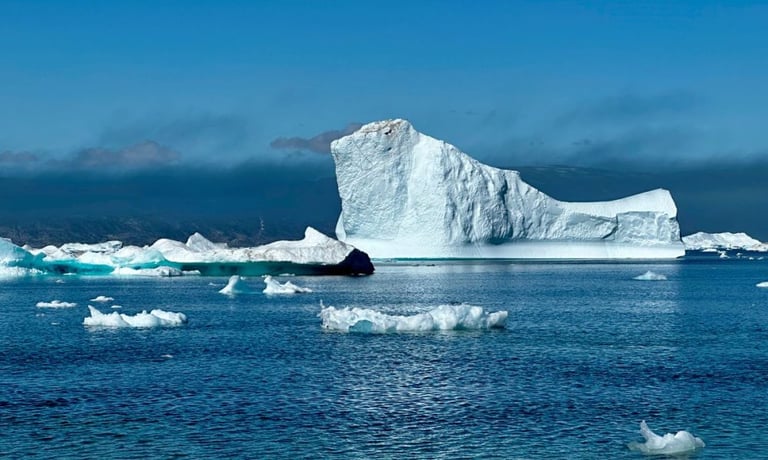

A new study shows icebergs in the Arctic are transporting large amounts of rock and debris to the deep seafloor, where hard-substrate habitats are forming and reshaping benthic biodiversity.
As glacier mass loss continues, the dispersal of iceberg-derived lithogenic material is expected to rise, further expanding hard-bottom habitats and potentially altering Arctic deep-sea ecosystems, while increasing navigational risks in Fram Strait.
In Fram Strait, amplified iceberg traffic driven by warming and retreating glaciers is delivering lithogenic material to the seafloor, reshaping benthic communities.
Leading researchers stress the need for interdisciplinary collaboration to attribute observed patterns to climate change rather than natural variability.
Dropstones on the East Greenland margin have grown denser from 2015 to 2017, with smaller stones becoming more common and clustering indicating non-random deposition linked to iceberg delivery.
A coupled iceberg drift model identifies two persistent drift corridors and shows a modest rise in iceberg transit frequencies after 2005, driven by greater pack-ice mobility and faster melt, enhancing downstream transport.
Forty years of RV Polarstern observations reveal a sustained increase in icebergs in Fram Strait, rising about 6.4% per decade, with more frequent groups containing multiple icebergs.
Satellite-assisted reconstructions and four decades of Polarstern data point to a climate-linked rise in iceberg frequency and grouping since the early 2000s.
Backtracking identifies two main source regions for Fram Strait icebergs: northeast Greenland and nearby glaciers feeding the western side, and Russian Arctic glaciers feeding the eastern side, with NEGIS discharge rising around 2003 aligning with the iceberg uptick.
The increase in iceberg numbers and debris transport since the early 2000s is tied to destabilization of Northeast Greenland and Russian Arctic glaciers, plus changing sea-ice conditions driven by climate change.
Debris origin is validated by matching seabed stone sizes and mineral composition to those on the icebergs, reinforcing the link between iceberg debris and source glaciers.
A 2021 iceberg sample carried lithogenic cargo similar in composition and size to seafloor dropstones, confirming direct iceberg-to-seabed deposition far from calving fronts.
Summary based on 3 sources
Get a daily email with more Science stories
Sources
Nature • Jun 10, 2026
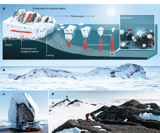
Amplified Arctic iceberg traffic reshapes benthic biodiversity
Nature • Jun 10, 2026
Rocks falling from melting icebergs host deep-sea oases of biodiversity
Talker • Jun 10, 2026
Icebergs putting oceans at risk by carrying debris: study