EU Proposes Industrial Accelerator Act to Boost Clean-Tech Manufacturing Amidst Cost and Trade Concerns
June 15, 2026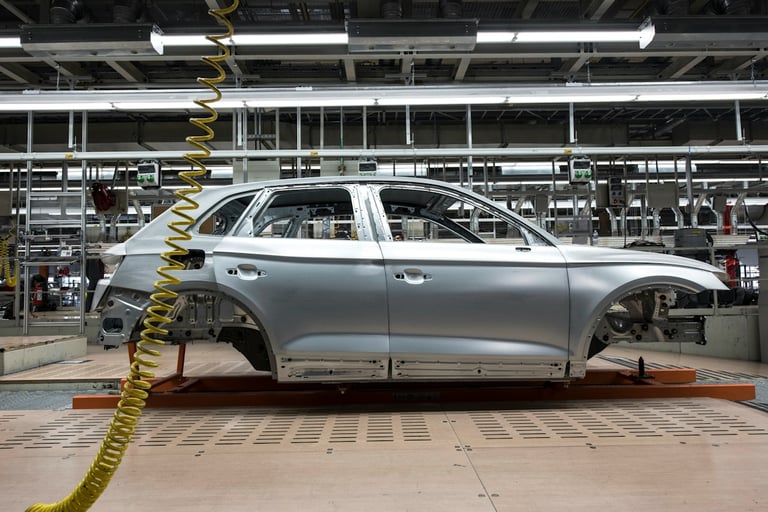

Industry and think tanks warn of both upside—decarbonizing upstream materials—and downsides, including higher costs, uneven sector impact, and the risk that production shifts to third countries to stay competitive.
Industry responses vary: some see value in decarbonizing energy-intensive materials and strengthening local value chains, while others worry about cost burdens, competitiveness, and potentially slowing Europe’s overall green transition.
China’s commerce ministry criticized the proposal as serious institutional discrimination that could undermine fair competition, signaling potential EU–China tensions over industrial policy and trade.
The IAA marks a shift from broad policies toward binding EU-origin/localization requirements, aiming to lift EU manufacturing share from about 14% of GDP in 2024 toward 20% by 2035, even if public procurement costs rise somewhat.
Despite trade tensions, EU–China climate cooperation is expected to continue, as the IAA’s local-origin rules hinge on public funding usage rather than broad trade measures, keeping doors open for collaboration on emission-reduction tech and green infrastructure.
Implementation is not immediate: the regulation must pass EU legislative processes and likely undergo amendments, with debates on how strictly ‘low-carbon’ and ‘EU-made’ must be applied and concerns about potential workarounds via third-country assembly.
The proposal targets sectors like batteries, EVs, PV solar, and critical raw materials, amid China hosting about 80% of global battery and solar manufacturing, as the EU seeks domestic capacity and market security through public funding rules.
The European Commission proposed the Industrial Accelerator Act to boost Europe’s clean-tech manufacturing by prioritizing low-carbon and EU-made products in projects with public funding, aiming to reduce reliance on third-country supply chains.
Cost implications are debated: EU-compliant solar panels can be pricier than Chinese options, but the IAA argues Chinese pricing is artificially low and that overall consumer electricity costs would rise only modestly due to other project cost shares; batteries may face higher costs in some sectors.
The IAA includes a foreign-investment screening rule: investments over EUR 100 million in strategic sectors from third countries with more than 40% global capacity must meet criteria on ownership, joint ventures, tech transfer, R&D, local employment, and local procurement, intensifying scrutiny of Chinese firms.
The IAA sets EU-origin and localization thresholds, including 25% of steel and aluminium in public procurement meeting low-carbon standards (steel need not be EU-origin), 25% aluminium, 5% cement must be both low-carbon and EU-made, with clean-tech components and some battery/solar tech increasingly requiring EU-origin sourcing.
Summary based on 1 source
Get a daily email with more EU News stories
Source
Eco-Business • Jun 15, 2026
What would ‘Made in Europe’ mean for China’s clean tech?