New IBDverse Dataset Illuminates Crohn's Disease with 1.18 Million Gut Cells, Revealing Key Inflammation Drivers
June 16, 2026

IBDverse is established as a comprehensive online dataset to support future Crohn’s and broader IBD research.
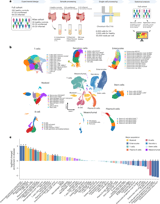
A large-scale single-cell RNA sequencing study maps gene activity across more than 50 gut cell types in Crohn’s disease, creating IBDverse, an open data resource containing about 1.18 million gut cells from patients and healthy controls.
The study analyzed biopsies from Crohn’s patients with terminal ileitis and healthy volunteers, identifying cell-type–specific gene expression changes and molecular inflammation signatures using scRNA-seq.
A lasting molecular scar is identified in gut epithelial progenitor cells, with interferon-driven MHC class I upregulation persisting after inflammation resolves, potentially affecting future responses.
Functional validation includes interferon-gamma–induced organoid experiments showing coordinated upregulation of IFN signaling and MHC-I pathways across epithelial cell types, indicating epithelial-intrinsic antigen presentation during inflammation.
A major finding identifies ITGA4-high macrophages driving inflammation via the JAK/STAT pathway, with elevated cytokines like IL-6, IL-12, and IL-23, suggesting JAK inhibitors as potential therapy.
ITGA4+ and CD163+ macrophages are enriched in inflamed tissue, showing upregulated cytokine signaling and IL-6/IFN pathways, with JAK2/STAT1 signaling linked to their activity and to immunoproteasome–MHC-I communication.
A macrophage population with high ITGA4 expression emerges as a key inflammation driver through JAK/STAT signaling, highlighting therapeutic targets including JAK inhibitors used in IBD.
The study acknowledges limitations, including less than 50% replication of differentially expressed genes between discovery and replication cohorts and variability across cell types, underscoring the need for larger studies.
Differential expression reveals thousands of DEGs in inflamed tissue, particularly in epithelial cells and T cells, with replication across cohorts varying by cell type.
The work highlights open science and replication, showing only a subset of expression changes replicated across cohorts, yet replicated signals consistently point to meaningful epithelial–immune cell interactions in the gut.
Genetic association integration links Crohn’s heritability to specific cell types; NOD2 is enriched in certain monocytes/macrophages but not broadly dysregulated, and NOD2+ cells are major sources of oncostatin M, a potential biomarker/target.
Summary based on 3 sources
Get a daily email with more Science stories
Sources
News-Medical • Jun 15, 2026
Gut cell study discovers lasting molecular scars of Crohn's disease
GEN - Genetic Engineering and Biotechnology News • Jun 16, 2026
Single-Cell RNA Sequencing Reveals Gene Activity Changes in Crohn’s Disease