SK Hynix to Double Memory-Chip Wafer Production to Tackle AI Memory Shortage by 2030
June 2, 2026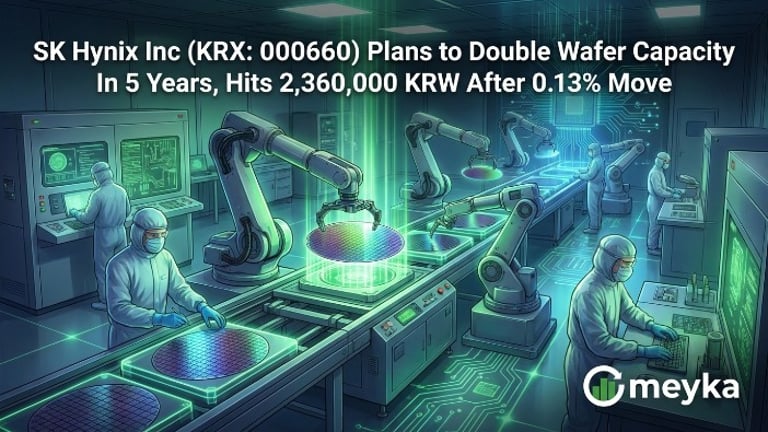

SK Hynix will double its memory-chip wafer production capacity over the next five years to address a persistent AI memory shortage expected to last through 2030, announced by chairman Chey Tae-won at Computex in Taipei.
The expansion coincides with SK Hynix surpassing $1 trillion in market value and positions the company to lead the AI-driven memory cycle, maintaining a strong HBM market share amid competition from Samsung and Micron.
Chey emphasized that success depends on meeting customer demand and sustaining high-level collaboration with TSMC, while downplaying direct pros/cons comparisons between TSMC’s model and Samsung’s integrated memory-foundry approach.
The cost of the buildout was not disclosed, with prices for land, equipment, and electricity cited as variables that make the total uncertain.
HBM4E roadmap will be guided by customer demand, with Nvidia currently the only confirmed customer for HBM4E.
Hynix aims to be a major supplier for Nvidia’s Vera Rubin AI platform and broader future Nvidia AI processors, highlighting ongoing collaboration with Nvidia and TSMC.
A standard industry disclaimer notes Meyka AI provides information for research purposes and is not financial advice.
Chey spoke at Computex in Taipei urging more partnerships in Taiwan beyond TSMC and cautioning that sustainable price growth is essential to protect the broader AI ecosystem.
He also called for expanding Taiwan partnerships and stressed that price increases must be sustainable to avoid harming AI deployment.
Q1 2026 results show revenue of about KRW 12.43 trillion and operating profit of KRW 5.29 trillion, with the stock around KRW 2.36 million and a small daily move.
Chey noted that bottlenecks in AI go beyond GPUs and memory to supply-chain constraints like power, water, equipment, and land that could become scarce.
Industry trends supporting expansion include rising AI infrastructure spending, demand for HBM4/HBM4E, ongoing memory shortages through 2027, higher server memory content per system, and growing advanced packaging needs.
Summary based on 8 sources
Get a daily email with more Tech stories
Sources

CHOSUNBIZ • Jun 2, 2026
Chey Tae-won warns HBM shortage through 2030, doubles SK hynix capacity plan - CHOSUNBIZ
Reuters • Jun 2, 2026
SK Hynix plans to double wafer capacity in next five years, group chairman says
The Star • Jun 2, 2026
SK Hynix plans to double wafer capacity in next five years, group chairman says
TradingView • Jun 2, 2026
SK Hynix plans major capacity expansion amid continued AI-driven demand