Taiwan's Defense Boost Sparks Regional Realignment Amid Rising China Tensions
June 22, 2026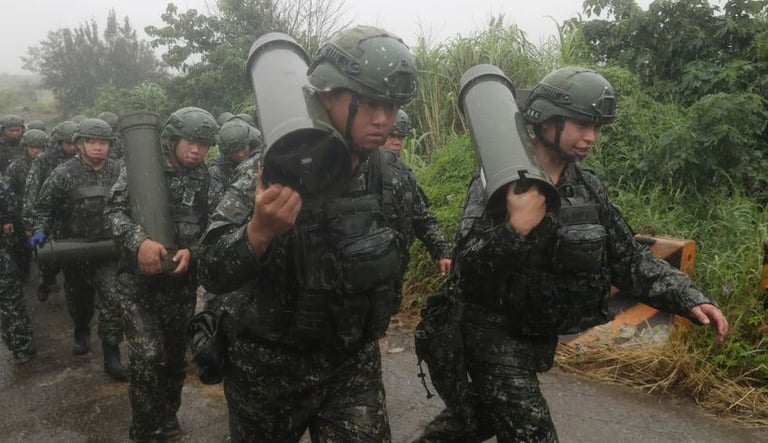

Taiwan and Ukraine are presented as parts of a single strategic architecture, where Western resolve in one theater shapes outcomes in the other, and premature concessions could embolden China.
The outlook suggests Xi Jinping pursues an incremental, patient approach, with a high-stakes U.S.-China meeting in late 2026 seen as pivotal for determining long-term tensions and the deterrence framework.
China’s coercive pressure has intensified, marked by Justice Mission 2025 drills and frequent incursions into Taiwan’s contiguity zone and airspace, signaling a shift toward possible blockade scenarios.
Allied reorientation is evident through France-Japan joint statements and broader regional alignment, signaling growing strategic clarity among partners regarding Taiwan and potentially outpacing U.S. messaging.
China uses export controls on rare earths and critical electronics to pressure Taiwan’s partners, while deepening ties with Taiwan’s opposition Kuomintang to sway domestic politics.
Donald Trump’s May 2026 Beijing visit reframes Taiwan as a litmus test for Western security commitments in Asia, with Xi Jinping prioritizing Taiwan on the international agenda.
Taiwan’s leadership signals intensified self-defense by aiming to raise defense spending to 3.3% of GDP this year and to about 5% by 2030, in response to ongoing external pressure.
Regional allies are recalibrating security policies, with Japan deploying long-range anti-ship missiles and talks of easing defense export restrictions affecting Australia, the Philippines, and South Korea.
The United States faces a shift where Beijing seeks a move from strategic ambiguity to de facto recognition of Chinese sovereignty over Taiwan, challenging traditional U.S. posture and testing ally unity.
The article draws on Valentyn Gladkykh’s analysis and Reuters/The Diplomat reporting to present a synthesized view of a coordinated regional response and the implications for the post-Ukraine order.
Summary based on 1 source