EU Advances Digital Euro: Aiming for Secure, Private, and Accessible Payments Across Europe by 2029
June 24, 2026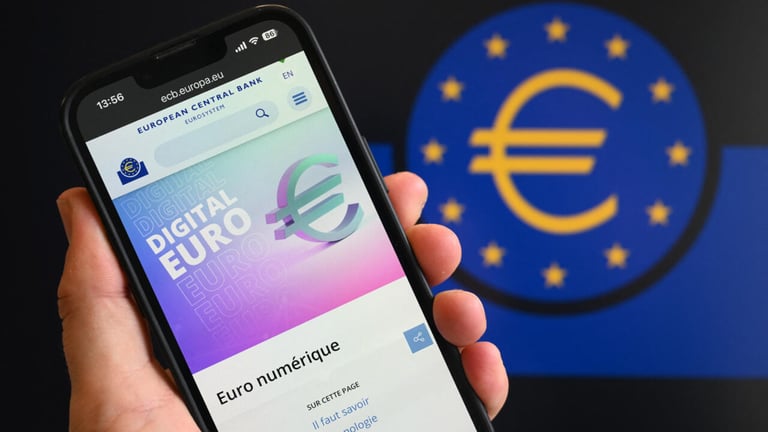

The European Union is moving toward launching a digital euro—a central bank digital currency issued by the ECB for use by citizens alongside cash and bank deposits.
The digital euro is designed for fast, secure, private online and offline payments across Europe, using an online account-based system and offline storage to function without constant connectivity, reducing dependence on Visa and Mastercard.
The European Parliament’s economic committee has approved the draft rules, bringing the EU closer to a centralized electronic currency that could lessen reliance on non-European payment networks like Visa, Mastercard, and other private providers.
Costs for participation are under discussion, with initial setup estimates of 4-6 billion euros over four years, and exemptions proposed for small businesses and the self-employed to maintain accessibility.
A nationwide awareness and education campaign will run in parallel with technical preparations ahead of the introduction.
The project sits within a broader, long-running EU debate about privacy, inclusion, and the balance between state control and private-sector influence since 2023.
Final approval is targeted by year-end, with potential plenary votes in Strasbourg and negotiations among Parliament, the Council, and the Commission as needed.
Possible uses include in-store, online, and person-to-person payments via cards, apps, or phones, with a pilot planned for 2027 and potential public availability by 2029 if negotiations conclude successfully.
The regulation contemplates concessions to win support, such as keeping banks central in distribution and offering exemptions for small businesses and the self-employed.
Early emphasis will be on user experience to appeal to younger consumers, aiming for ease of use comparable to existing payment methods.
ECB simulations suggest a possible deposit outflow risk up to 699 billion euros if there’s a 3,000-euro holding limit, with effects that vary by bank size.
The design includes privacy protections, including encryption and privacy-preserving tech like zero-knowledge proofs to verify transactions without exposing personal data.
Summary based on 6 sources
Get a daily email with more Crypto stories
Sources

Cyprus Mail • Jun 23, 2026
Digital euro will not replace cash, says Central Bank of Cyprus official
WTVB | 1590 AM · 95.5 FM | The Voice of Branch County • Jun 23, 2026
Digital euro clears key hurdle as EU seeks to break free from U.S. credit cards
RFI • Jun 24, 2026
Digital euro wins key EU backing as lawmakers approve draft rules
TechSpot • Jun 24, 2026
Europe's digital euro is one step closer, designed to cut out Visa and Mastercard