Revolutionary Study Uncovers New Pathway for Bacterial Membrane Protein Insertion, Redefines Evolutionary Understanding
June 29, 2026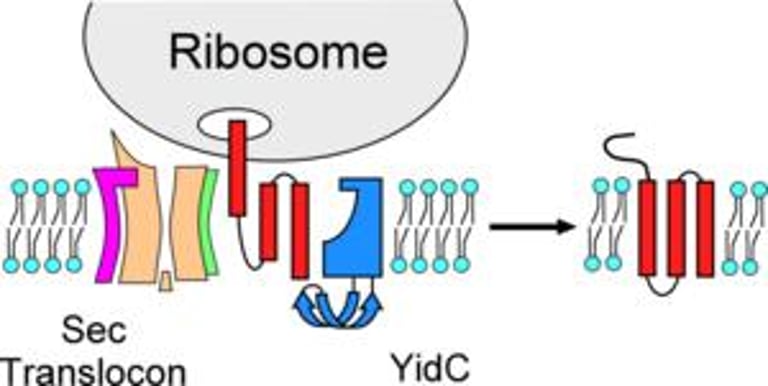

A new study reveals how bacterial membrane proteins are inserted into the cell membrane through a pathway beyond the long-assumed lateral gate, showing evolutionary conservation with eukaryotic systems.
The findings indicate that bacteria may utilize a back-of-Sec entry mechanism, previously thought to exist only in higher organisms, prompting a reevaluation of membrane protein insertion across evolution.
In addition to the known lateral gate of the SecYEG translocon, researchers identify a back-of-Sec pathway for membrane protein insertion in bacteria.
The research was conducted by Heinrich Heine University Düsseldorf and Ludwig Maximilian University Munich, with the work published in The EMBO Journal and led by Professor Alexej Kedrov.
Lead author Max Busch notes the study clarifies the folding timing during biogenesis, advancing understanding of membrane protein formation and evolutionary parallels with yeast.
Researchers determined the full path from nascent membrane proteins in the ribosome to their insertion in the membrane, mapping when three-dimensional folding occurs along the process.
Cryogenic electron microscopy was used to obtain high-resolution structures of ribosome–membrane protein complexes, revealing the complete insertion sequence.
The study presents the first visualization of the full route from ribosome-bound nascent membrane proteins to functional bacterial insertion, detailing where folding happens along the pathway.
Led by Professor Kedrov, the work provides a comprehensive picture of the insertion route and folding timing, offering new insights into bacterial membrane protein biogenesis.
Key components include ribosomes as factories, the SecYEG translocon, and helper proteins like YidC that receive and embed proteins into the lipid bilayer.
Future work aims to clarify the roles of additional proteins in insertion and to refine the mechanics of the SecYEG–YidC system in bacteria.
Broader implications include potential applications in bioengineering and antibiotic target discovery, with ongoing work to deepen structural understanding and define roles of other insertion proteins.
Summary based on 2 sources
Get a daily email with more Science stories
Sources
EurekAlert! • Jun 29, 2026
Membrane research: Publication in The EMBO Journal
• Jun 29, 2026
Bacterial Protein Insertion Explained