FSU Study Revolutionizes Satellite Ocean Observations with Advanced Internal Tide Modeling Framework
June 3, 2026

A Florida State University study published in Science Advances introduces a new interdisciplinary modeling framework to predict kilometer-scale internal tides that interfere with SWOT satellite readings, enabling about 60 percent more accurate observations of ocean circulation.
The framework uses HYCOM, a physics-based ocean model, to remove internal-tide interference from SWOT data for higher-precision high-resolution satellite measurements of surface dynamics.
Researchers from Florida State University and collaborators developed the approach to improve the quality of global ocean surface measurements and to better capture nonlinear interactions among internal tides, currents, and bathymetry.
Co-authors include researchers from the University of Michigan, Oregon State University, the Naval Research Laboratory, the University of Southern Mississippi, and CLS Group, with funding from the Office of Naval Research, NASA, and CNES.
The study reflects a broad, multi-institutional collaboration across defense-oriented ocean modeling and Earth observation communities, underpinned by significant government and space-agency support.
Lead author notes the importance of cross-domain cooperation in leveraging satellite observations and ocean-modeling expertise to advance understanding of coastal and open-ocean processes.
The framework integrates ocean physics, data assimilation, and remote sensing to capture nonlinear interactions among internal tides, currents, and bathymetry.
This work marks a step toward real-time ocean modeling tied to continuous satellite monitoring, enhancing the ability to observe fine-scale dynamics from space.
Improved accuracy enhances observation of the ocean’s fine-scale circulation and heat and carbon exchange, with implications for forecasting, navigation, infrastructure planning, and climate understanding.
In addition, the correction supports better climate-model verification and may yield economic and environmental benefits through improved navigation and fisheries management.
By correcting internal-tide interference, SWOT can better observe eddies and currents, improving insight into heat and carbon uptake between the ocean and atmosphere and supporting broader applications.
The method aims to refine processing of orbital sensor data to potentially increase the precision of global ocean observations.
Summary based on 4 sources
Get a daily email with more Science stories
Sources

EurekAlert! • Jun 3, 2026
Satellite science: FSU research increases accuracy of high-resolution ocean surface measurements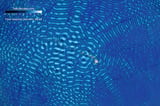
Florida State University News • Jun 3, 2026
Satellite science: FSU research increases accuracy of high-resolution ocean surface measurements
BIOENGINEER.ORG • Jun 3, 2026
Advancing Satellite Science: FSU Study Enhances Precision of