UK Economy Struggles with Rising Costs, Job Cuts, and Construction Slowdown
June 4, 2026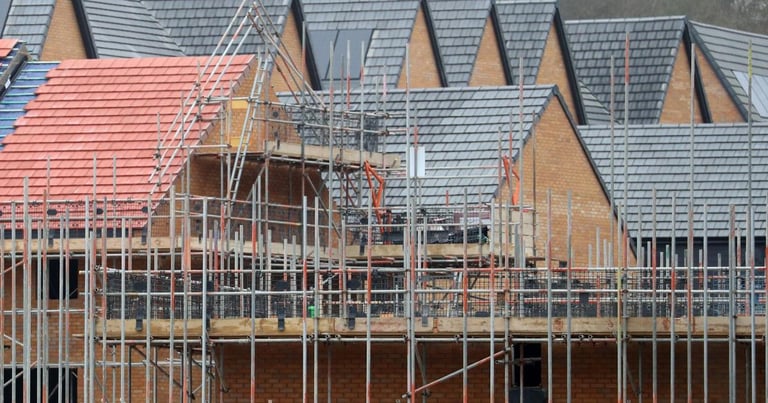


Around two-thirds of surveyed firms reported higher supplier prices in May, driven by fuel, energy, and transport costs, with widespread shipping delays and raw material shortages.
Business optimism for the next year weakened to one of the lowest levels since late 2022, with about 31% expecting higher output and 25% expecting lower output.
Residential construction bore the largest decline, while commercial work also contracted, albeit less sharply.
The May PMI remains far below the 50 mark that separates growth from contraction, continuing a contraction trend since early 2025.
Builders reported project delays, postponed large investments, and tighter client budgets, resulting in fewer opportunities for work in May.
The UK economy faces renewed headwinds as demand softens due to a mix of economic and political uncertainty, higher energy and transport costs, and rising borrowing costs.
Broader euro-area PMI for the UK-related mix also pointed to softness, with the all-sector index at 48.7 in May, the lowest since early 2025.
Despite weakness, there is a glimmer of future infrastructure demand, especially in energy, power networks, roads, and rails, supported by ongoing efforts to reskill for cleaner energy and defence opportunities.
Job cuts persisted for a 17th consecutive month, although the pace of decline eased from April.
The downturn is reinforced by ongoing supply pressures—fuel surcharges, energy costs, and transportation bills—plus shortages of raw materials and shipping delays.
Construction contracted in May at the fastest pace since May 2020, with the UK construction PMI at 38.2, indicating a deepening drop in activity.
Supplier delivery times lengthened for the third straight month, with the strongest downturn in vendor performance since December 2022 amid shipping delays and material shortages.
Summary based on 7 sources
Get a daily email with more Macroeconomics stories
Sources

Investing.com • Jun 4, 2026
UK construction activity shrinks at fastest pace since 2020, PMI shows
Investing.com • Jun 4, 2026
UK construction output falls at fastest pace in six years
Oxford Mail • Jun 4, 2026
UK construction output declines at fastest rate since pandemic, survey finds
Bucks Free Press • Jun 4, 2026
UK construction output declines at fastest rate since pandemic, survey finds