SpaceX Achieves First In-Orbit X-ray Imaging with Portable System, Paving Way for Space Medicine
July 14, 2026


Researchers anticipate AI-assisted analysis to help assess image quality and flag medical issues when expert radiologists aren’t readily available on Earth.
Potential space-medicine benefits include rapid injury diagnosis, assessment of spacesuit integrity, evaluation of spacecraft equipment, and analysis of Moon rocks or mineral samples.
In-flight image quality was slightly lower for larger body areas, but all images met diagnostic thresholds, confirming the technique’s viability for space medical assessment.
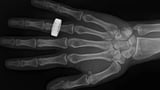
Aboard SpaceX's Fram2, astronauts achieved the first in-orbit diagnostic-quality X-ray imaging of the human body using a miniaturized, ultraportable wireless system, with preflight, in-flight, and postflight images all deemed diagnostic by radiologists on Earth.
Lead researcher Sheyna Gifford from Mayo Clinic highlighted the goal of having multiple imaging modalities in space and noted traditional X-ray machines are bulky and prone to motion blur.
The crew, each with only about four hours of training, successfully operated the portable X-ray device, showing that nonmedical astronauts can perform basic imaging tasks in space.
Limitations include limited in-flight imaging time, potential gaps in real-time telehealth on future missions, and the need for more rugged hardware for longer journeys such as Moon or Mars missions.
Researchers foresee broader applications in space and on Earth, including imaging for remote or underserved communities if systems are miniaturized and hardened for space conditions.
Next steps aim to make portable imaging systems smaller, more rugged, and easier to clamp in place to expand use on future missions and in remote Earth locations.
Future improvements center on ruggedness, secure mounting for detectors and generators, and continued size reductions to enable broader deployment, including potential use in satellite inspection and lunar rover analysis.
Challenges included positioning and stabilizing patients and equipment in microgravity, with central body images (chest, abdomen, pelvis) being harder to align than extremities.
In-flight imaging faced alignment difficulties in microgravity, particularly for central-body views, though they remained diagnostically useful.
Summary based on 6 sources
Get a daily email with more Tech stories
Sources
Gizmodo • Jul 14, 2026
Behold: The First Medical X-rays Ever Taken in Space
euronews • Jul 15, 2026
First diagnostic X-rays captured during spaceflight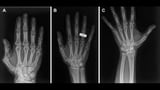
Space • Jul 14, 2026
1st-ever X-rays in space offer hope for possible patients headed to the moon
Talker • Jul 14, 2026
Medical X-rays taken in space for the first time