Revolutionizing Crypto Security: Beyond Cold Storage to Constrained-Signature Wallets in the Fight Against Attacks
July 16, 2026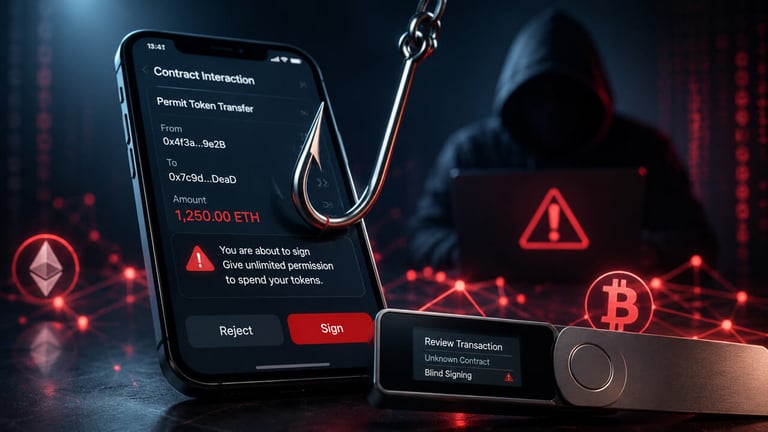

A clear distinction is drawn between cold storage and active signing, with a proposal that policy-based or constrained-signature wallets could mitigate risk by restricting what a signature can authorize, rather than relying solely on stronger hardware or display.
The discussion unfolds amid rising crypto attacks and emphasizes education and cautious user behavior as critical components of security.
ZachXBT argues that using a dedicated iPhone can offer security advantages over traditional hardware wallets through a more secure environment, a larger display, and independence from a user’s main devices, though this view is debated in the security community.
There is no universal best practice; the right approach depends on user needs, threat models, and technical ability, with many advanced users adopting multi-layered custody solutions.
Industry data from 2025 shows large-scale wallet compromises affecting about 80,000 people and roughly $713 million, underscoring that narrowing risk to key isolation misses other vulnerable stages in signing and approval.
ERC-7730, a standard for translating contract calls into human-readable instructions, is highlighted as a solution to improve signing transparency, with involvement from Ledger and the Ethereum Foundation aiming for industry-wide adoption.
Hardware wallets have historically protected keys offline but face risks like compromised firmware, supply chain attacks, phishing, and user error, which remain ongoing concerns.
A dedicated-device strategy would demand strict discipline, including avoiding unnecessary apps, keeping software updated, protecting recovery phrases, and thoroughly verifying transactions.
The overall takeaway is that self-custody is evolving into a programmable risk system where restricting what a key can do may be more effective than universal control, though practical adoption requires careful design, policy controls, and vigilance against phishing and software compromise.
This debate sits within broader industry moves toward improved security technologies, including new authentication methods, biometric security, and decentralized custody solutions.
Despite improvements, experts like Jameson Lopp advocate for dedicated hardware for cold storage of substantial sums, suggesting different strategies may be needed for cold storage versus active signing.
Historical losses often stem from attackers manipulating what signers see and approve, not just key exposure, with Bybit and Radiant Capital cited as examples where signatures were misused after transaction presentation.
Summary based on 2 sources
Get a daily email with more Crypto stories
Sources

CryptoSlate • Jul 16, 2026
Is using an old iPhone safer than a crypto hardware wallet? ZachXBT thinks so
Blogger • Jul 16, 2026
ZachXBT Criticizes Hardware Wallets, Says Dedicated iPhone Could Be Safer