Aral Sea Drying Releases 748 Million Tons of CO2, Transforming Carbon Sink into Major Emissions Source
July 17, 2026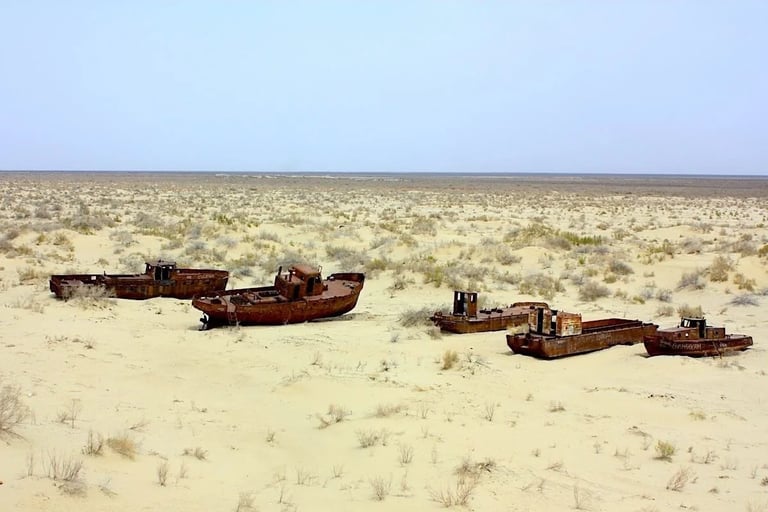

Limitations exist due to shallow sediment sampling (up to 50 cm); researchers plan deeper drilling next year to better quantify carbon dynamics, noting potential underestimation from deeper layers.
Keeping substantial carbon in the ground could create economic incentives, including carbon credits around $18 billion, to support mitigation or restoration efforts.
A new Science study shows the Aral Sea’s drying has released about 748 million metric tons of CO2 between 1960 and 2022, turning a long-standing carbon sink into a significant carbon source.
As the lakebed dried, stored carbon from sediments was released into the atmosphere, amplifying climate impact and underscoring the dynamic carbon balance of drying inland waters.
Scientists warn that drying lakes may represent climate tipping points, with emissions potentially driving warming more aggressively unless mitigated or reversed.
Researchers estimate roughly half of those emissions occurred in the first 15 years after exposure of lake beds, with wind-blown sediment contributing about a fifth of total CO2 releases.
Experts say practical fixes would require cross-border water management and could leverage carbon-credit mechanisms to incentivize restoration or conservation.
The study highlights that restoring or reframing management of drying lakes could yield climate benefits via carbon credits, though aligning water rights and infrastructure across borders is complex.
The urgency to research practical pathways forward is underscored by the risk that these dry-flux emissions could dominate future climate forcing.
Uncertainty remains because current estimates depend on limited core depth, with deeper layers potentially altering past and future emission figures.
The Aral Sea, once the world’s fourth-largest inland body of water, has largely dried up due to Soviet-era irrigation for cotton, leaving a vast salt flat and triggering ecological and humanitarian crises.
There remains about 605 million metric tons of carbon still in the basin, which could be kept in the ground and valued at roughly $18 billion in carbon credits, presenting an incentive framework for conservation.
Summary based on 2 sources
Get a daily email with more Science stories
Sources
Yahoo News • Jul 17, 2026
Drained Under Soviet Rule, Aral Sea Has Become a Huge Source of Emissions
Grist • Jul 16, 2026
The Aral Sea isn’t just an ecological nightmare – it’s a carbon bomb