Tara Polar Station Embarks on Year-Long Arctic Mission to Study Climate Change and Biodiversity
July 19, 2026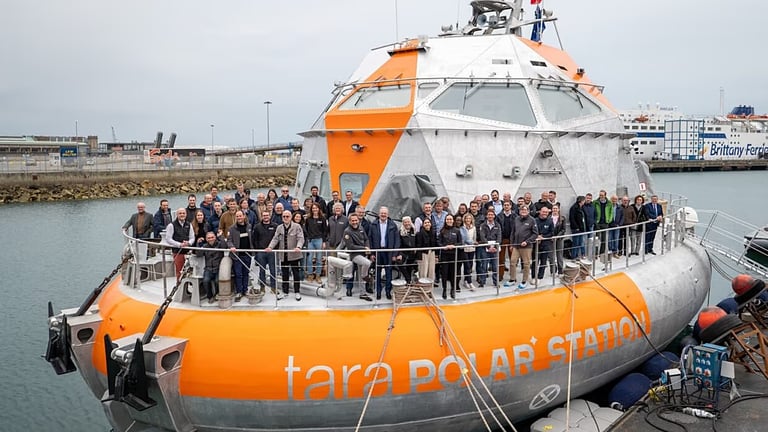


A floating research station shaped like a large aluminium igloo, Tara Polar Station, sets out from Lorient, France, for a year-long Arctic drift to study biodiversity and climate-change impacts in a region rarely observed.
The Tara Océan foundation plans Tara Polaris I as a drifting polar station for twenty years to monitor Arctic warming, sea ice, and life under extreme conditions.
A strong emphasis on team cohesion and safety guides the mission, including firearm training and a sled dog to aid wildlife awareness.
The crew comprises 12 people in winter and 18 in summer, selected for close-quarters work, including scientists, a medical officer, and support staff, with preparations for polar risks like bears.
Crew selection prioritized teamwork and psychological fitness to handle confinement, darkness, and loneliness, with preparations for polar bear encounters.
The voyage begins mid-August with an icebreaker clearing a path and a planned sequence of ten expeditions from 2026 to 2045, each about two years apart.
Key sources from AWI, The Guardian, and the Sea Ice Portal frame the mission’s aim to deepen understanding of climate processes and Arctic biodiversity in hard-to-reach areas.
Researchers stress the urgency of winter-time Arctic data, as many measurements are currently summer-biased, and the expedition seeks to fill gaps in Arctic life under extreme conditions.
A notable technology is the underwater robot Ann, installed on the station to regularly examine the under-ice environment around the platform.
The project touches on related ideas such as artificial sea ice stabilization and forest preservation concepts, discussed as auxiliary considerations in the broader context.
The Arctic is one of the planet’s two polar regions with six months of darkness and six months of daylight, featuring few permanent observation stations.
Scientists will collect over 10,000 samples from the water column down to 2,000 meters, the atmosphere, and sea-ice cavities to document biodiversity and inform climate models, including bacteria’s influence on cloud reflectivity.
Summary based on 5 sources
Get a daily email with more World News stories
Sources
Yahoo News • Jul 19, 2026
Floating igloo leaves France for polar exploration mission
euronews • Jul 19, 2026
Heading for the North Pole on Tara Polar Station's first expedition