Quincy Faces Legal Battle Over Religious Statues on Public Property
July 19, 2026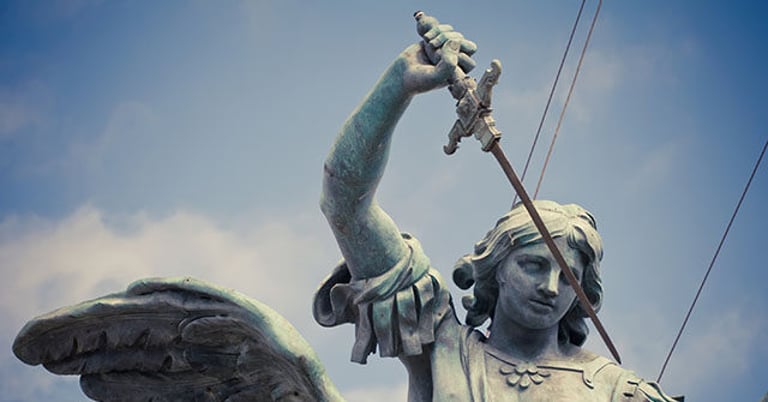

Quincy, Massachusetts plans to install two 10-foot bronze statues—St. Michael the Archangel and St. Florian—outside its new public safety headquarters, triggering a legal battle over religious displays on government property.
The case has drawn involvement from major civil liberties groups, including the ACLU of Massachusetts, Americans United for Separation of Church and State, the Freedom from Religion Foundation, and Cloherty & Steinberg LLP, with the Becket Fund representing the city.
The National Fraternal Order of Police and Massachusetts Fraternal Order of Police noted that the statues are revered across many faiths and that their symbolism extends beyond Catholic or Christian communities.
Opponents argue the statues violate the Massachusetts Constitution by lacking a secular purpose and advancing religion, challenging government neutrality in religious matters.
Becket Fund senior counsel Joseph Davis contends that the ACLU’s stance against public-art displays is anti-art and anti-history, asserting Quincy has the right to honor first responders with these symbols.
A decision from the Massachusetts Supreme Judicial Court is anticipated, with potential implications for whether religious art can be displayed on government property and possible reach to the U.S. Supreme Court.
Media coverage has noted Fox News reporting on the court’s decision, highlighting broader debate about religious art in public areas.
Key participants include Mayor Thomas Koch, Becket Fund senior counsel Joseph Davis, and ACLU of Massachusetts’ Jessie Rossman, with court filings outlining the arguments on both sides.
The dispute began in May 2025 when faith groups and taxpayers sued Quincy and Mayor Thomas Koch, alleging constitutional violations related to religious neutrality.
If appealed to the U.S. Supreme Court, the case could influence the balance between allowing religious imagery in public spaces and maintaining church-state separation.
Becket Fund for Religious Liberty represents Quincy and argues the Massachusetts Supreme Court should permit the statues, asserting they honor first responders without constituting invalid religious endorsement.
The core question is whether the statues’ Catholic iconography constitutes establishment of religion or a permissible civic symbol honoring first responders.
Summary based on 2 sources
Get a daily email with more US News stories
Sources
Fox News • Jul 19, 2026
Supreme Court showdown looms over St Michael statue blocked from public safety building
Breitbart • Jul 19, 2026
Fight with ACLU over St. Michael Statue Could Land in SCOTUS