New Study Identifies Rare Meteorite Type as Chicxulub Impactor, Shifts Extinction Theory
July 20, 2026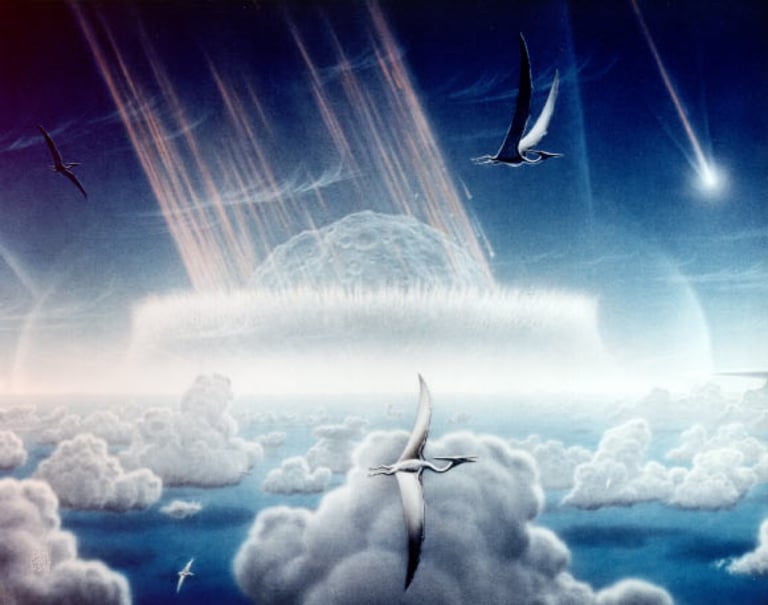

Overall extinction theory remains intact, with refined understanding of how the impact’s composition influenced atmospheric and climatic effects.
The study notes CO chondrites’ low volatile content underscores why sulfur was unlikely the primary killer in the extinction event.
New nickel-isotope analysis of KT boundary clay points to a CO chondrite—specifically a carbonaceous Ornans-type meteorite—as the Chicxulub impactor.
The team studied a global K–Pg boundary clay layer and concluded the impactor’s composition was that rare CO chondrite.
The Chicxulub impact, dated to roughly 66 million years ago, is closely linked to the end-Ccretaceous mass extinction that wiped out dinosaurs and many other species.
Where earlier theories blamed atmospheric cooling from sulfur and soot, the new results emphasize that dust ejected into the atmosphere was the main driver of the extinction climate shift.
The Science Advances study reexamines the Chicxulub event and its role in the end-Cretaceous extinction.
Researchers acknowledge ongoing uncertainty about the impactor’s origin, with possibilities ranging from distant outer Solar System debris to the outer asteroid belt near Jupiter.
Despite the uncertainty, scientists suggest the impactor may have originated from a distant, debris-rich region at the edge of the Solar System.
Key physical details include an estimated impactor size of about 10–15 kilometers and an impact velocity near 64,000 km/h, creating the Yucatán crater beneath the peninsula.
While the impactor’s composition is unusual, sulfur from the object is unlikely to be the primary extinction driver, refining the extinction mechanism rather than overturning it.
CO chondrites contain notably lower volatile elements, including sulfur, challenging the idea that sulfur was the main extinction driver.
Summary based on 2 sources
Get a daily email with more Science stories
Sources
Gizmodo • Jul 20, 2026
The Asteroid That Killed the Dinosaurs May Not Have Done It Exactly How We Thought
Sci.News: Breaking Science News • Jul 18, 2026
Dinosaurs May Have Been Wiped Out by ‘Oddball’ Space Rock