AI and Multiomics Reveal 3D Genome Changes Driving Alzheimer's Progression
July 23, 2026

Researchers used single-cell multiomics and AI to link genome 3D organization with gene regulation changes in Alzheimer's disease, providing a multiscale view of how genome folding relates to disease progression.
In AD, there is a reproducible shift in genome contact patterns across major brain cell types, with reduced short-range and increased long-range interactions, and weakened compartment segregation evidenced by increased mixing of active and inactive regions.
The study provides a multiscale map linking 3D genome remodeling to cell type–specific transcription and tissue architecture in AD, establishing genome folding as a regulatory layer in AD pathology and offering a framework for identifying regulatory elements and gene programs for future functional studies and therapeutic exploration.
The research was conducted by teams from Carnegie Mellon University, the University of Pittsburgh, and the University of Washington, and published in Science with funding from the National Institutes of Health.
The study uses GAGE-seq to jointly profile gene expression and 3D chromatin contacts in single cells, and integrates this with chromatin accessibility data and spatial transcriptomics, complemented by a transformer-based model to predict AD-related gene expression from genome structure.
Researchers used single-cell GAGE-seq to measure gene expression and 3D genome contacts in the same cell, and integrated spatial transcriptomics to map these changes onto intact prefrontal cortex tissue.
A key finding is increased compartment mingling, where active (A) and inactive (B) chromatin compartments lose clear spatial separation, correlating with reduced overall gene expression and disrupted cellular function.
Regulatory element findings: At promoter-proximal regulatory elements, interactions weaken, while midrange regulatory interactions become more prominent, especially at sites tied to chromatin loop organization.
Senior author Jian Ma highlighted the importance of integrating genome folding with cell state and tissue context to move beyond cataloging changes toward understanding mechanisms and informing next steps in research and therapy.
The AI model Hicformer showed that 3D genome features provide information beyond DNA sequence for explaining AD-relevant gene expression and helping prioritize distal regulatory elements mediated by chromatin contacts.
The study introduces Hicformer, a transformer-based AI model that combines DNA sequence, genome-folding features, and local 3D contact maps to predict cell-type-specific gene activity and test how structural changes drive transcriptional programs.
Predictive modeling results: 3D genome features add explanatory power beyond DNA sequence alone for AD-related gene expression, enabling prioritization of distal regulatory elements whose effects are mediated through chromatin contacts; the model (Hicformer) demonstrates this predictive value.
Summary based on 3 sources
Get a daily email with more Science stories
Sources

Neuroscience News • Jul 23, 2026
3D Genome Disruption in Alzheimer’s Disease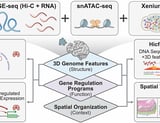

GEN - Genetic Engineering and Biotechnology News • Jul 23, 2026
Single-Cell Maps Reveal Genome Reorganization in Alzheimer’s Brain Cells