Industrial Chicken Farming Fuels Antibiotic-Resistant Campylobacter Spread, Study Warns
July 27, 2026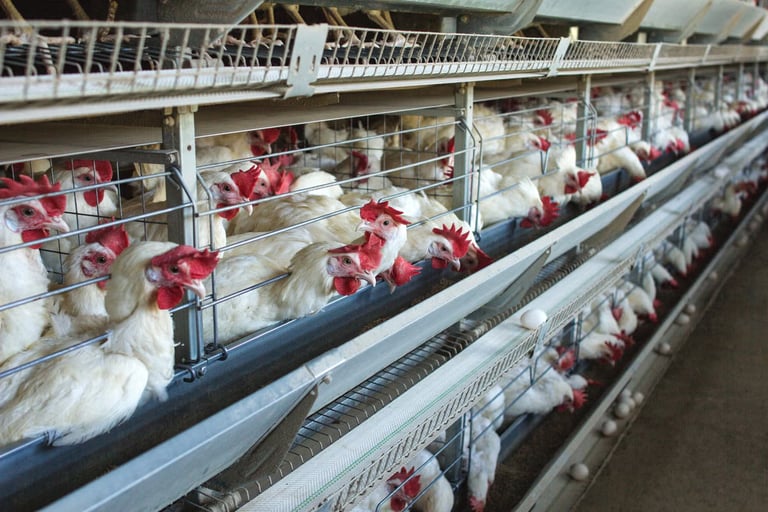


Industrial farming, especially densely populated chicken flocks, accelerates the spread and diversification of Campylobacter, a leading foodborne pathogen that is increasingly resistant to antimicrobials.
About four in five human Campylobacter infections in Oxfordshire are linked to poultry meat, many of which are antibiotic-resistant.
Industrial chicken farming facilitates exchange and mixing of Campylobacter strains between chickens and wild birds, creating conditions for rapid evolution and diversification.
The findings were published in the Proceedings of the National Academy of Sciences, with contributions from researchers including Sam Sheppard and Oakem Kyne.
Public health messages emphasize that proper cooking kills Campylobacter, but handling or contaminated surfaces can still pose low-dose exposure risks.
Understanding how farming practices influence bacterial evolution is viewed as essential to reducing the burden of foodborne disease and antimicrobial resistance.
Senior author Sam Sheppard notes that human-driven environmental changes in farming can boost the spread of infectious disease and resistance, underscoring the need to study evolutionary dynamics to mitigate future risks.
Modeling shows that once chicken populations reach a critical size, strains of wild-bird origin can sustain themselves in poultry even if poorly adapted to chickens.
Experts warn that the scale of poultry production accelerates pathogen evolution, increasing risks to human health.
Oakem Kyne highlights that as Campylobacter adapts to life in poultry, it gains traits that aid survival and antimicrobial resistance, underscoring the importance of studying farming impacts on evolution.
Densely populated poultry flocks act as ecological 'pathogen sponges,' absorbing and amplifying strains from multiple sources and enabling wild-bird strains to persist in poultry.
Genetic changes tied to adaptation to the chicken environment include antimicrobial resistance traits and other traits like oxidative stress tolerance and metal acquisition.
Summary based on 3 sources
Get a daily email with more World News stories
Sources

The Guardian • Jul 27, 2026
Industrial chicken farming accelerating spread of diarrhoea bacteria, study finds
The Independent • Jul 27, 2026
Factory farming could be fuelling spread of common disease which causes food poisoning
Talker • Jul 27, 2026
Industrial chicken farming spreading leading cause of food poisoning