Discovery of 396 Ancient Earthworks Reveals Aquiry Civilization's Vast Influence in Amazon
July 29, 2026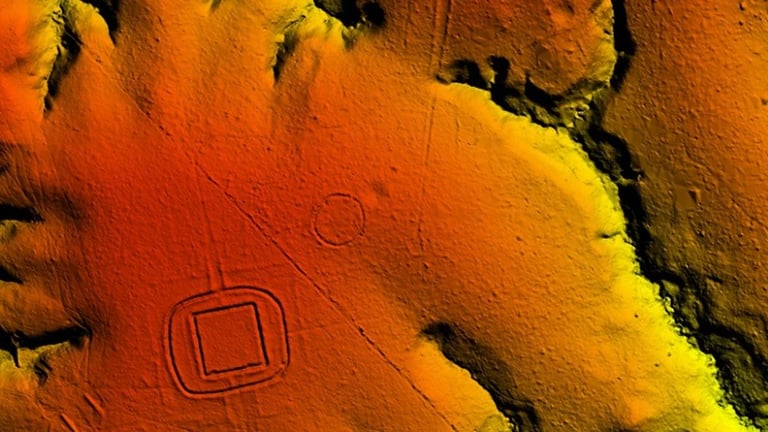

A new Nature study in the Southwest Amazon reveals about 396 previously unknown earthworks across roughly 4,500 square kilometers, suggesting the Aquiry civilization may have numbered between 24,000 and 30,000 structures across the region.
The piece serves as a research briefing that situates the Nature study within broader historical and geographic scholarship.
Compared with later mound villages from the thirteenth century onward, the Aquiry centers show continuity in community organization and emphasize geoglyphs’ ceremonial and administrative functions.
Lidar surveys uncover hundreds of large geoglyphs and extensive ancient roads tied to the Aquiry, a polity that thrived roughly from 600 BCE to AD 850.
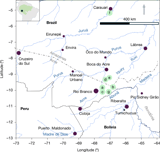
Earlier airborne laser scanning in 2024 identified 432 earthworks in Acre and Amazonas, with 36 new ones, refining the mapped geographic extent and population estimates for the Aquiry.
The findings imply precolonial civilizations shaped soils and forest composition, challenging assumptions about pre-contact land use in the tropics.
Most earthworks belong to the Aquiry complex, a multicultural network with ceremonial or political centers rather than solely permanent residences.
If validated, the Aquiry landscape would have supported large wooden longhouses, maize, manioc, squash, cotton fields, and managed fruit- and nut-bearing trees, indicating long-term environmental stewardship.
The cause of the Aquiry’s decline remains unknown, though the environmental impact remains evident in the landscape.
The article underscores that the Amazon housed sophisticated pre-Columbian societies and calls for ongoing science journalism and support for research.
Kernel-density analyses suggest peak earthwork use around 100–300 CE with sites overlapping, indicating coordinated gatherings across the landscape.
Acknowledging canopy-detection uncertainties, the authors call for further archaeology to refine dates, functions, and population dynamics across the Amazon.
Summary based on 5 sources
Get a daily email with more Science stories
Sources
Nature • Jul 29, 2026
Over 20,000 precolonial earthworks in the Southwest Amazonia
Nature • Jul 29, 2026
Amazonian earthwork survey indicates ancient population was much larger than thought
New Scientist • Jul 29, 2026
Lost civilisation in the Amazon may have numbered 3 million people
Scientific American • Jul 29, 2026
Hundreds of ancient, never-before-seen ‘earthworks’ discovered in the Amazon