Historic Drone Footage Captures First-Ever Humpback Whale Calf Birth off Australia's Coast
July 29, 2026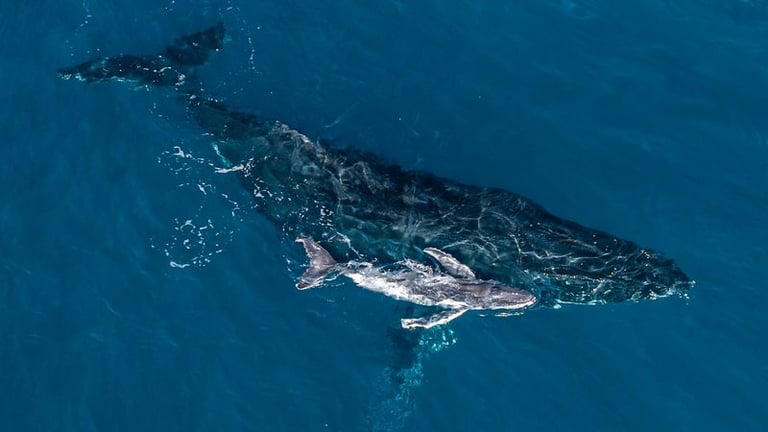


A world-first event off Australia’s east coast saw a humpback whale calf birth filmed by a drone for the first time, according to researchers and ORRCA, with the footage captured from about 700 metres away in compliance with regulations.
The drone footage, shot by Alex Forrest, an ORRCA volunteer and drone operator, is being prepared for scientific analysis to improve understanding of humpback birth processes and timing.
The sightings and rising population are framed within ongoing whale viewing and climate/environment reporting, highlighting a broader conservation context.
For Sydney observers, peak whale-watching runs roughly mid-August to November, with options including beach viewing and boat tours from Circular Quay and Darling Harbour.
Population context shows the annual humpback migration to northern breeding grounds rising from about 7,000 in 2004 to an estimated 50,000 this year, signaling recovery from whaling-era declines.
Humpback whales migrate annually along Australia's east coast toward warmer northern waters to mate and give birth, with calves weighing up to 40 tonnes and measuring up to 17 metres.
Calf survival on Australia’s east coast is around 67% to 87%, and most calves feed in calm, shallow waters before completing the migration.
The broader scientific significance lies in collecting data to understand population trends and changing environments, with ongoing analysis expected to yield new discoveries.
ORRCA head of research Annie Post notes the observation allows researchers to consider birthing contexts where mothers are alone versus accompanied by pods.
Experts suggest the sighting could challenge previous assumptions that humpback births occur primarily in tropical waters, indicating births near the New South Wales coast and possible shifts in reproduction patterns.
The sighting raises questions about where humpbacks reproduce, suggesting a broader range of birth locations than traditionally believed.
The calf was born around 1:00 pm and weighed about 1.5 tonnes, with gender not disclosed.
Summary based on 5 sources
Get a daily email with more World News stories
Sources
The Sydney Morning Herald • Jul 29, 2026
First drone footage of a humpback birth shows mum and bub thriving
SSBCrack News • Jul 29, 2026
Rare Drone Footage Captures Humpback Whale Giving Birth Off New South Wales Coast - SSBCrack News
Deutsche Presse-Agentur • Jul 29, 2026
In world first, drone films humpback whale giving birth off Australia