Asteroid Apophis to Grace Earth's Sky in 2029: A Historic Celestial Spectacle
July 6, 2026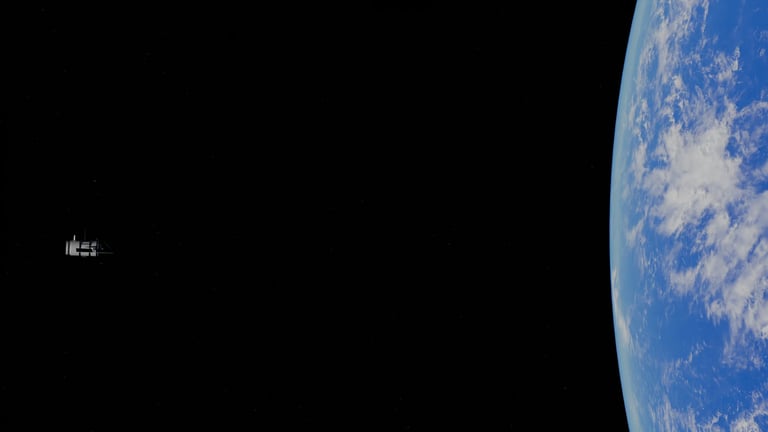

A 375-meter asteroid named Apophis will make a close, visible flyby of Earth on April 13, 2029, passing about 31,600 kilometers (19,700 miles) above the North Atlantic and will be observable with clear skies by billions worldwide.
This near-Earth encounter provides a rare chance to observe gravitational effects on an asteroid as it whizzes by, prompting coordinated observations from multiple missions and ground-based observatories.
Researchers caution that the exact outcomes of the flyby are uncertain, but data collected during the event will yield valuable scientific insights regardless of how the encounter unfolds.
Key viewing moments include a peak brightness over Cameroon around 4:35 p.m. Eastern Daylight Time, with the closest approach at about 5:45 p.m. EDT, when Apophis will shine like a modest star.
Observers will track Ramses’ development, OSIRIS-APEX’s trajectory and post-encounter rendezvous, and refined brightness and trajectory forecasts to determine exact sightlines.
Ground- and space-based observers, including Spain’s Canary Islands, will monitor the flyby for any surface changes or material exposure driven by gravitational effects.
NASA and MIT scientists emphasize that this is the first predicted visibly passing asteroid in human history, highlighting safety, curiosity, and learning opportunities rather than danger.
Apophis will be visible to the naked eye as a moving, star-like point, brightening to roughly the level of a modest star and crossing the sky mainly from Europe, Africa, and western Asia.
Prime viewing conditions could reach hundreds of millions to billions of people across Africa, Asia, eastern South America, and parts of Europe, depending on weather and light pollution.
Two space missions are planned: NASA’s OSIRIS-APEX to arrive shortly after the flyby and ESA’s Ramses to observe the encounter and capture early changes.
The event coincides with a Friday the 13th in 2029, underscoring both planetary-defense readiness and public fascination with real-time celestial events.
Decades of precise tracking have eliminated impact risk for 2029 and beyond, shifting the focus to scientific discoveries from the flyby.
Summary based on 2 sources