GIANT Mission Launches Robotic Expedition to Unravel Greenland's Glacier-Ocean Secrets
July 8, 2026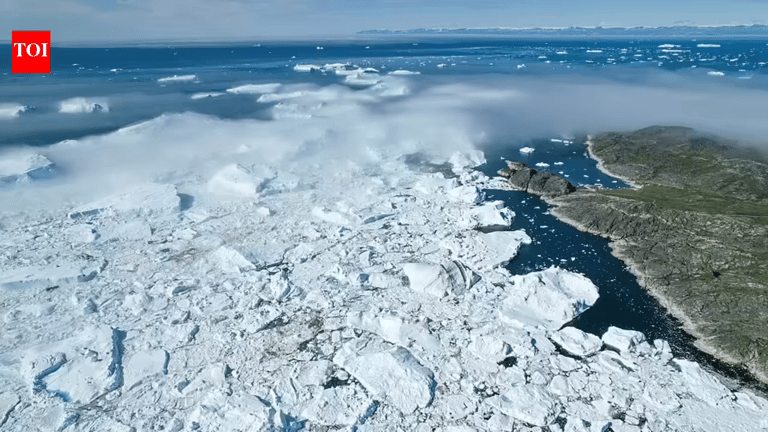

GIANT is a climate science mission in Greenland that will deploy autonomous drones, robotic boats, underwater vehicles and AI to map ice-ocean interactions and improve predictions of sea-level rise and climate tipping points.
The expedition, starting in July, will study the glacier-ocean boundary where ice meets seawater using a coordinated mix of aerial, surface, and underwater platforms and sensors.
Researchers aim to capture millimeter-scale observations to refine models of heat transfer in subglacial zones and the influence of trapped ancient air bubbles on mixing processes.
The data collected will cover melt dynamics, ocean temperatures, currents, salinity, and ice geometry to improve climate models and forecast sea-level rise and potential disruptions to ocean circulation.
A core goal is to observe ice, ocean and atmosphere interactions in the same region, a capability previously hindered by dangerous conditions and limited observation methods.
Greenland’s rapid glacier melt could affect the Atlantic Meridional Overturning Circulation (AMOC), with potential consequences for global climate, rainfall, ecosystems, and temperatures if freshwater input weakens the current.
A central concern is how freshwater from melting ice could disrupt AMOC, potentially altering weather in Europe and North America and influencing global climate patterns.
The mission underscores the urgency of understanding Greenland’s rapid glacier changes to provide early warnings and inform adaptation and infrastructure planning for coastal regions.
GIANT will integrate airborne, marine, and underwater observations to improve climate models of glacier behavior and ocean circulation, building on prior UCLA and NASA satellite research to enhance sea-level rise projections.
If successful, GIANT would inaugurate a new era in climate exploration by coordinating air, surface, and deep-sea robotic observations in a largely unexplored region to improve global climate predictions.
The expedition advances the study of extreme environments, employing many robotic technologies that are experimental and intended to be refined during the mission.
AI will guide data collection by fusing satellite data with ground conditions to identify scientific blind spots and direct robots to regions of rapid change for higher-resolution insights.
Summary based on 2 sources
Get a daily email with more Science stories
Sources
The Times Of India • Jul 8, 2026
A robot army is heading to Greenland for a mission scientists once thought was impossible