NATO Boosts Stinger Missile Production in Europe to Strengthen Defense and Industrial Resilience
July 9, 2026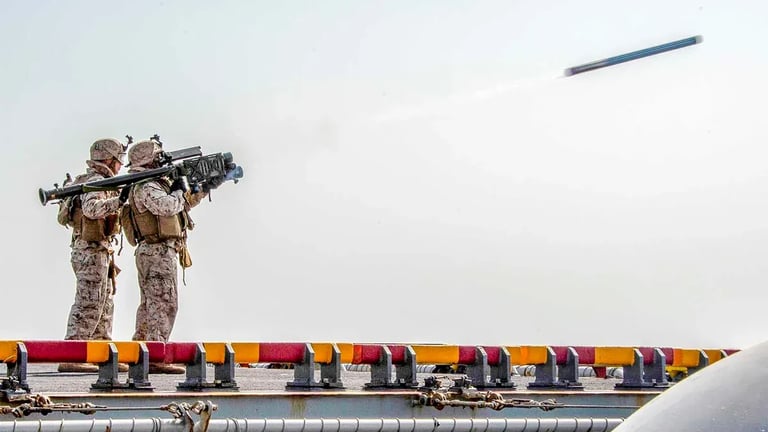


The European production plan for the FIM-92 Stinger complements existing U.S. and NATO efforts, including a 2025 life-extension package and a 2024–2026 procurement trajectory, signaling a shift toward more resilient, multinational missile production.
This European expansion is part of a broader NATO industrial strategy started in 2022 to reduce dependence on U.S.-based manufacturing for missiles, artillery, and air defense systems.
The Stinger’s role remains short-range and direct-engagement oriented, with ongoing improvements in sensing, rosette scanning, and proximity fuze to counter drones and challenging backgrounds.
RTX stock moved modestly higher in pre-market trading after closing the prior session at about $201.37.
Raytheon’s Land & Air Defense Systems president said the company aims to double Stinger production and strengthen the industrial base and global network to ensure allied access.
The program has broader industrial and strategic implications, strengthening local engineering expertise and supplier networks with potential spillovers to future NATO missile programs.
Overall, the move reflects NATO’s emphasis on air-defense priority and industrial resilience as core components of modern deterrence and long-term modernization.
The Stinger is a lightweight, portable air defense system used by 24 countries, including 10 NATO members, underscoring its broad international role.
The European arrangement focuses on the guidance section—the seeker and processing elements—critical for target discrimination in cluttered airspace and enables software updates without full missile redesign.
Announced on July 7, 2026 in Ankara, the move aims to bolster NATO stock replenishment and defend against low-altitude threats such as aircraft, helicopters, cruise missiles, and drones.
The initiative supports NATO’s need for inventory depth and a distributed defense-industrial base to ensure ready missiles for deterrence, training, and replenishment, especially after stock transfers to Ukraine.
Expanding European capacity helps maintain stocks during crises, enabling faster replenishment and sustained operations in prolonged conflicts.
Summary based on 3 sources
Get a daily email with more EU News stories
Sources


Defense Feeds • Jul 9, 2026
Raytheon Expands Stinger Missile Production Europe to Rebuild NATO Stocks
RTTNews • Jul 7, 2026
RTX's Raytheon Teams Up With European Firms To Boost Stinger Missile Production