Japan's H39 Rocket Launch Boosts Space Security and Navigation Independence with Michibiki No. 7 Satellite
August 10, 2026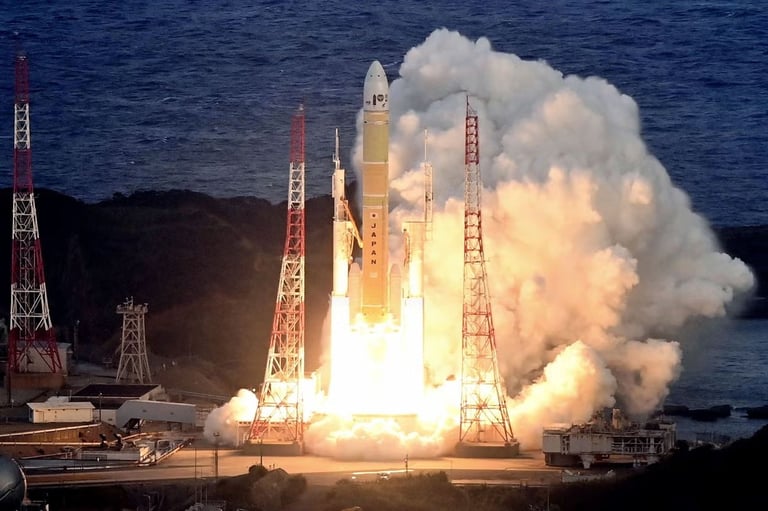

In August 2026, Japan successfully launched the next-generation flagship rocket H3 from Tanegashima Space Center at 4:23 a.m. local time, carrying Michibiki No. 7 to bolster the Quasi-Zenith Satellite System (QZSS).
Michibiki No. 7 joins the operational pool to support an ongoing constellation that currently operates five satellites, with No. 5 lost in December and No. 7 helping restore redundancy.
QZSS is Japan’s independent high-precision positioning network designed to reduce reliance on foreign navigation data and provide centimeter-level accuracy under favorable conditions.
Following the launch, investigators will examine potential issues with common components, manufacturing procedures, or launch-site operations, recognizing implications for future flights.
QZSS’s high-precision signals remain reliable in challenging environments, underscoring importance for defense and critical infrastructure.
The mission advances Japan’s civil navigation capabilities, strengthens U.S.–Japan space-security collaboration, and supports plans for future deep-space and commercial activities amid calendar-tight schedules and recent manufacturing setbacks.
China’s Chang’e 7 lunar mission is being prepared from Wenchang, highlighting ongoing unmanned lunar ambitions despite a separate setback with the Long March 7A.
Launch coverage is available via Space.com in partnership with JAXA and on JAXA’s YouTube channel, with live commentary starting roughly an hour before liftoff.
Weather caused multiple delays before liftoff, first due to a passing typhoon and then due to conditions around the launch site.
Strategically, the mission hardens space-domain awareness in the Indo-Pacific under the QZSS/HP program, with plans to expand to eleven satellites by the late 2030s for better redundancy and regional coverage.
An expanded QZSS constellation enables Japan to support autonomous systems, precision agriculture, disaster response, and national security through a more independent navigation infrastructure.
Japan aims to ramp up launch activity toward about 30 launches per year by the early 2030s, with discussions to potentially raise capacity to eight launches annually through JAXA and Mitsubishi Heavy Industries.
Summary based on 17 sources
Get a daily email with more Science stories
Sources
NHK WORLD • Aug 11, 2026
Japan's GPS satellite Michibiki put into orbit
SpaceNews • Aug 11, 2026
H3 launches navigation satellite
Japan Wire by Kyodo News • Aug 11, 2026
Japan successfully launches H3 rocket carrying positioning satellite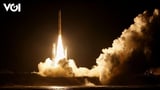
VOI.ID • Aug 11, 2026
Japan Successfully Launches H3 Rocket, Michibiki No. 7 Satellite Enters Orbit