Hybrid Genomes Drive Evolution: New Insights into Introgression Across Species
August 12, 2026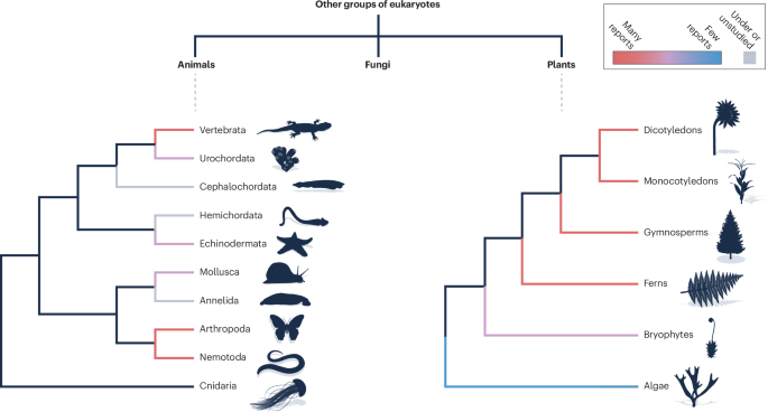

Introgression and hybrid genomes shape adaptation across a broad range of taxa, from plants and fish to primates and humans, highlighting its pervasive evolutionary role.
Meta-analyses show introgression is more common than once thought, underscoring the need for standardized reporting across studies.
Robust methods for local ancestry inference, detection of introgressed loci, and simulation-based assessments (including ABBA–BABA, HMMs, pseudolikelihood, and multispecies coalescent approaches) are central to current research.
Foundational reviews and books from the late 1990s to mid-2000s establish core concepts and frameworks for studying natural hybridization and evolution.
The collection portrays hybridization as a widespread and impactful evolutionary force, challenging the notion that it is rare in animals.
Genomic and statistical tools—D-statistics, qpAdm, f-statistics, admixture graphs, and phylogenetic networks—are essential for detecting and characterizing introgression.
Recent work emphasizes repeatable evolutionary patterns in hybrids and reinforces the call for standardized reporting to accurately compare introgression across studies.
Human evolution is a focal point, with Neanderthal and Denisovan introgression illustrating broader implications for speciation and extinction dynamics across taxa.
Empirical findings show ancient and ongoing hybridization driving adaptive radiations (such as in cichlids), evidence of selection on admixed genomes, and the influence of recombination on introgression outcomes.
Summary based on 1 source
Get a daily email with more Science stories
Source
Nature • Aug 11, 2026
Genetics and genomics of hybridization