Flea Beetles: The Tiny Heroes That Transformed North America's Battle Against Leafy Spurge
August 12, 2026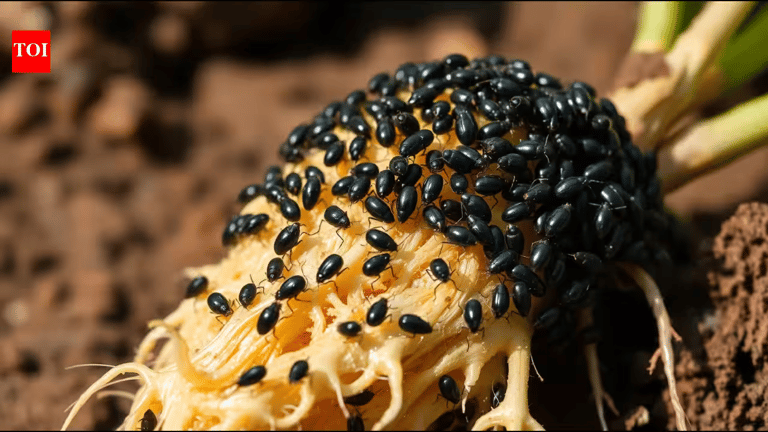

A small release of European flea beetles in 1988 near Valley City, North Dakota, sparked one of the most successful biological control programs in U.S. agriculture, eventually spreading across the northern United States and Canada and cutting leafy spurge cover on treated lands by as much as 90% within a few years.
The beetles primarily suppress leafy spurge through their larvae, which burrow into the soil to feed on roots, weakening the plant and allowing fungal pathogens to amplify damage, leading to substantial reductions in above-ground vegetation over time.
Field studies show foliar leafy spurge cover dropping from more than half of the ground cover to about 10% within four to five years after establishing the beetles, with roughly two-thirds of release sites ending below 5% cover, effectively restoring grazing land.
While outcomes varied by local conditions like soil type and which Aphthona species established, the program stands as a landmark example of successful biological control that transformed millions of acres.
Researchers started with Aphthona flava in 1986 with limited success, but by 1988 released a mixed population of Aphthona czwalinae and Aphthona lacertosa, which became dominant by 1995—especially Aphthona lacertosa.
The overarching lesson is that carefully chosen biological agents, released in small numbers under scientific supervision, can become self-sustaining and deliver large-scale ecological and agricultural benefits.
Leafy spurge is a deep-rooted Eurasian weed infesting millions of hectares in pastures and rangelands; it is toxic to cattle due to milky latex and resists conventional herbicides because of its extensive root system.
The beetles spread across North America through deliberate redistribution by land managers and natural dispersal, with extensive releases at Theodore Roosevelt National Park and across the northern Great Plains during the 1990s, expanding into Canada.
Summary based on 1 source