BRICS Ministers Slam EU's CBAM as Trade Barrier, Demand Tripled Adaptation Finance for Developing Nations
August 18, 2026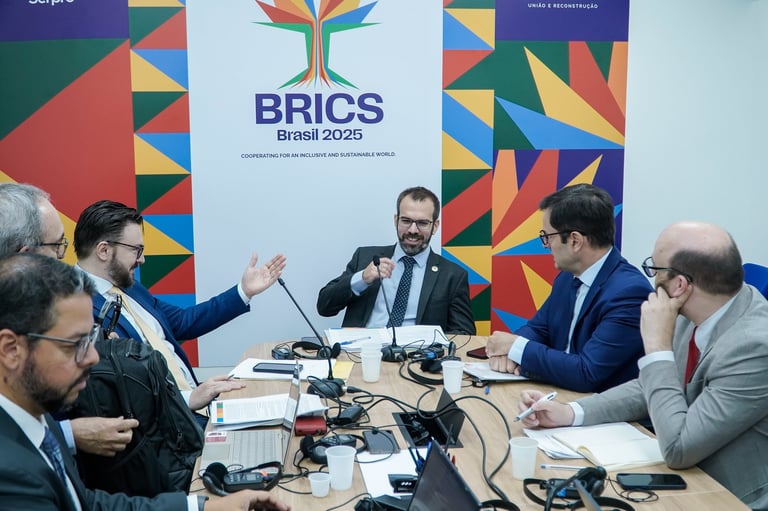


BRICS climate ministers in New Delhi criticized the EU's Carbon Border Adjustment Mechanism as unilateral, punitive, discriminatory, and protectionist, warning it could become a new trade barrier for developing economies.
CBAM fully phased in at the start of 2026, requiring importers of carbon-intensive products such as iron and steel, aluminium, cement, fertilisers, hydrogen, and electricity to account for production-related emissions to prevent carbon leakage.
BRICS, originally including Brazil, Russia, India, China, and South Africa, has expanded to include Egypt, Ethiopia, Iran, Saudi Arabia, the UAE, and Indonesia, reflecting a broader regional footprint.
Discussions noted ongoing relevance of recycled aluminium and related trade and sustainability opportunities, illustrating practical implications for the aluminium sector.
Adaptation finance is distinguished from mitigation finance, targeting climate impacts such as water security, agriculture, infrastructure, disaster preparedness, and climate-resilient livelihoods.
Adaptation finance priorities focus on water security, agriculture, infrastructure, disaster preparedness, and resilient livelihoods, with emphasis on easier access, measurable delivery, and impact tracking.
The BRICS document emphasizes adaptation and resilience for developing countries, recognizing limited adaptive capacity and calling for balanced mitigation and adaptation efforts.
India’s BRICS Chairship 2026 stresses equity under the Paris Agreement, common but differentiated responsibilities, and improved access to finance, technology transfer, and capacity-building for developing nations.
Resolution will require international coordination, technology transfers, climate finance, transparent emissions standards, and consideration of developing countries’ circumstances to avoid climate policy becoming trade friction while pursuing decarbonization.
Eight BRICS-listed principles outline voluntary, non-prescriptive guidance on people-centric adaptation, integrating traditional knowledge, and ecosystem-based approaches across sectors.
BRICS calls for greater climate finance for developing countries, aiming to triple adaptation finance by 2035 with grants and concessional funding, tied to UN climate commitments and trackable delivery.
Adaptation funding should be new, additional, predictable, and accessible, delivered as grants or concessional finance without increasing developing-country vulnerabilities.
Summary based on 16 sources
Get a daily email with more EU News stories
Sources

The Times Of India • Aug 18, 2026
BRICS nations oppose EU carbon border tax at the group's environment ministers’ meeting
EUobserver • Aug 19, 2026
BRICS countries condemn EU carbon tax as ‘punitive and protectionist’
Dailyhunt • Aug 19, 2026
BRICS Members Oppose EU's Carbon Border Adjustment Mechanism, Call It 'Discriminatory'
Business Standard • Aug 19, 2026
Brics nations oppose EU's CBAM, say it burdens developing economies