New York's Waters Welcoming Whales: Conservation Efforts and Boater Education Aim to Prevent Collisions
August 18, 2026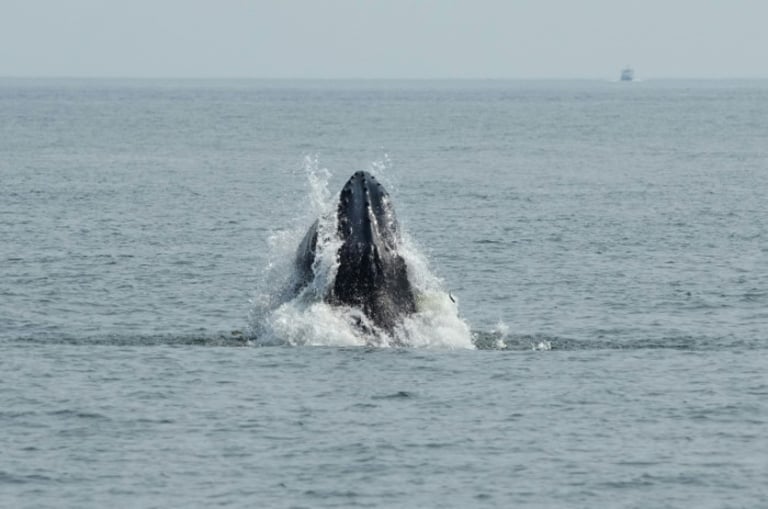

A growing population of humpback whales is frequenting New York’s coastal waters, drawing public excitement and prompting policy attention to protect them amid heavy maritime traffic.
Whale sightings have become common due to cleaner habitats from environmental protections, abundance of prey like Atlantic menhaden, and climate-driven changes in prey distribution.
Whales face risks from vessel strikes and entanglements in busy ports, which prompted NOAA to designate an Unusual Mortality Event after the 2017-2018 period following delisting as endangered.
Local experts say mariners need new skills to coexist with whales, including recognizing whale behavior and reporting sightings to prevent strikes.
Notable whale behaviors observed include lunge-feeding and breaching, with individuals like NYC0318 becoming local favorites for spectators.
The Whale Awareness Act, signed by Governor Kathy Hochul, integrates marine mammal protection into state boater safety courses and vessel registrations to educate mariners and reduce collisions.
The Whale Cognitive Act requires marine mammal protection content in safety training for ship operators and in vehicle registration processes, reflecting policy responses to risks.
New policies advancing risk mitigation include the Whale Awareness Act, which embeds marine mammal protection education into state boater safety and vessel registration.
Despite the risks, the conservation narrative highlights whales as a growing hallmark of New York’s coastal environment and boating culture.
Educational initiatives for seafarers include an online course by Carl LoBue and The Nature Conservancy focusing on whale behavior, sighting reporting, and collision avoidance.
Ocean expert Carl LoBue is developing guidance materials to help crews recognize whales, report sightings, and navigate among whale populations.
Researchers and conservationists are leading educational efforts, using online courses to reduce collisions and improve safety for whales and humans.
Summary based on 4 sources
Get a daily email with more Science stories
Sources
Kuwait Times • Aug 18, 2026
Whales spark joy in New York but face threats from boat traffic
Bangkok Post • Aug 18, 2026
Whales spark joy in New York but face threats from boat traffic
ST • Aug 18, 2026
Whales spark joy in New York but face threats from boat traffic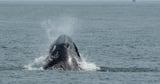
Báo Lao Động • Aug 18, 2026
Humpback whales in New York waters face maritime risks