Black Gubernatorial Candidates Prioritize Policy Experience Amid Historic Representation Milestones
August 19, 2026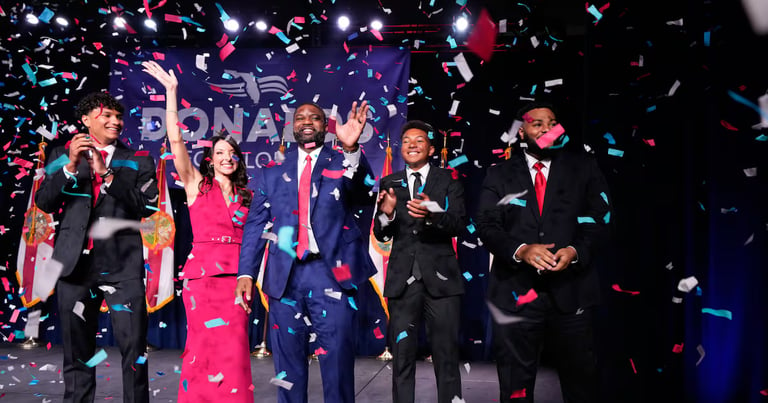

A slate of Black gubernatorial nominees spans both parties, including Aaron Ford in Nevada, Lisa Demuth in Minnesota, John James in Michigan, Keisha Lance Bottoms in Georgia, Jermaine Johnson in South Carolina, and David Crowley in Wisconsin, with merit and policy priorities at the forefront.
The discussion frames race in politics as multifaceted: some candidates downplay identity politics while others argue that historical representation shapes policy attention for Black communities.
Democrats stress that diverse leadership is essential to address issues impacting Black communities—voting rights, civil rights, health disparities, inflation, and economic opportunity—while noting redistricting in nonwhite-majority areas and pushback on diversity initiatives.
Maryland Governor Wes Moore, as chair of the National Governors Association, presents his role as part of a broader national challenge and progress in representation.
Moore argues that his historic status signals a national conversation on representation and policy priorities, not merely an achievement to celebrate.
As NGA chair, Moore frames the moment as a call to tackle nationwide challenges rather than a personal milestone alone.
Michael Lucas of the MacIver Institute offers Econ 101-style critique of socialism, positioning capitalism as humane and contrasting it with a conservative critique of socialist alternatives.
A Post-Crescent column recounts a DOJ discrimination lawsuit against Uber concerning riders with disabilities, illustrating personal experience aiding a disabled family member.
Anthony Pahnke urges David Crowley to model messaging after Francesca Hong and emphasizes consistent outreach and farmer-friendly policies to improve Democrats’ electoral prospects.
Moore and other Black candidates challenge the long-running electability narrative, arguing that broader electorates can yield statewide wins in swing areas and beyond.
The period 2024–2026 features shifts like Supreme Court redistricting and debates over diversity initiatives that may influence turnout and Black voter viability.
Analysts note rising Black political participation in this cycle, with turnout growing in Black-majority Southern counties, signaling a broader mobilization in response to district and representation changes.
Summary based on 9 sources
Get a daily email with more US News stories
Sources

AP News • Aug 19, 2026
Americans have elected just 3 Black governors. That could change this year | AP News
Las Vegas Sun • Aug 19, 2026
Americans have elected only 3 Black governors. This year, 8 major party candidates are on the ballot
The Boston Globe • Aug 19, 2026
Americans have only elected 3 Black governors. November could change that.
NBC 6 South Florida • Aug 19, 2026
Americans have elected only 3 Black governors. This year, 8 major party candidates are on the ballot