HaloRasAR: Breakthrough Biosensor Reveals Real-Time Ras Activity in Live Cells
August 19, 2026

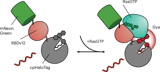
HaloRasAR is a chemigenetic biosensor that enables live-cell visualization of endogenous Ras activity with high spatial and temporal resolution by using a circularly permuted HaloTag and the far-red fluorophore JF635, marking a major advance in studying Ras signaling in living cells.
By targeting endogenous Ras rather than overexpressed constructs, HaloRasAR provides more physiologically relevant measurements across multiple compartments, including the plasma membrane and intracellular membranes like the Golgi.
All supporting data are available from the corresponding author upon request, with source data linked to the Nature article, indicating this is a primary research report in the biosensor/Ras signaling space.
The study uses HaloRasAR to compare Ras activity downstream of growth factor stimulation and PKC activation, showing that different upstream signals yield distinct spatial patterns of Ras activity.
HaloRasAR links fluorescence changes to the geography and timing of Ras signaling, enabling assessment of whether activation is sustained or transient and whether signaling is localized to certain organelles.
HaloRasAR enables monitoring of Ras activity across cellular compartments, expanding insights beyond the plasma membrane to intracellular sites and offering improved relevance for native signaling conditions.
The work emphasizes that compartmentalized Ras signaling can influence drug responses, and that measuring endogenous Ras activity in situ can enhance understanding of cancer biology and Ras-targeted therapies.
The article frames HaloRasAR as a tool for live-cell pharmacology, highlighting its potential to map how pharmacological interventions affect Ras signaling in different cellular contexts.
Context includes development and characterization of an endogenous Ras activity biosensor applied to living cells, with implications for pharmacology studies targeting Ras pathways.
Applied to live-cell pharmacology, HaloRasAR revealed subcellular-specific inhibition profiles when testing a Ras(G12C) inhibitor and a GEF inhibitor, suggesting compartmentalized drug efficacy.
Mechanistically, HaloRasAR combines a genetically encoded targeting component with a synthetic fluorescent ligand in a chemigenetic design, offering advantages in labeling control, brightness, and timing over traditional fluorescent proteins.
Summary based on 2 sources
Get a daily email with more Science stories
Sources
Nature • Aug 19, 2026
A chemigenetic endogenous Ras activity biosensor for live-cell pharmacology
BIOENGINEER.ORG • Aug 19, 2026
Chemigenetic Biosensor Tracks Endogenous Ras Activity in Living Cells