Slack Introduces AI-Powered Collaborative Coding Channels for Streamlined Workflow and Enhanced Transparency
August 20, 2026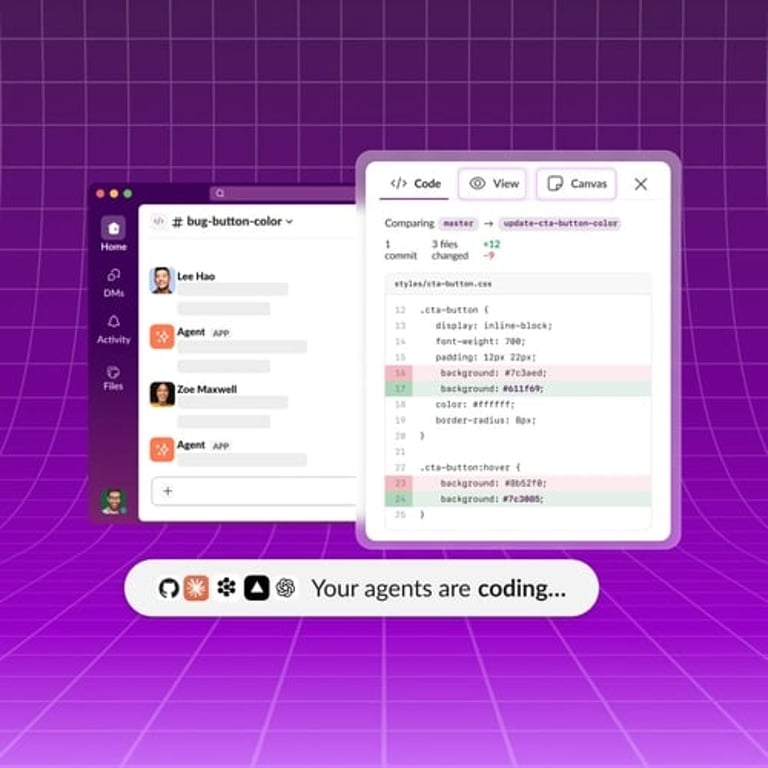

Slack is launching dedicated collaborative coding channels, Slack Code, where teams can vibe-code with AI agents directly in Slack, reducing tool-switching and keeping conversations in one place.
Within these channels, teams can audit code diffs, view live outputs, give feedback, and approve changes before deployment, with diffs visible to everyone in the channel.
Channels automatically archive when work is complete, creating a searchable record of the project.
There are limits: increased visibility may introduce noise, and human review remains essential for high-stakes changes; agents inherit existing permissions and controls.
Analysts, including Manoj Chandra Jha, Amit Kumar Jena, and Advait Patel, weigh the benefits and caveats of this approach.
Slack Code emphasizes governance-forward deployment with workspace permissions and data boundaries, plus IT visibility through an Agent Browser and centralized controls.
Analysts expect productivity gains from faster fixes, better cross-functional input, fewer handoffs, and educational value from seeing prompts, plans, and corrections.
The approach aims to close the knowledge gap in meetings by keeping all relevant information in the discussion, improving brainstorming, forecasting, evaluations, and problem-solving.
No-code/low-code accessibility, security, governance, and the goal of reducing shadow AI through centralized controls are emphasized.
Setup and management guidance cover local and VPS deployment options, with considerations on cost, uptime, and integration with existing AI tools.
Transparency into the agent’s reasoning and steps could help teams learn and revisit past changes, addressing context loss in traditional workflows.
Common use cases span content creation, data analysis, and workflow automation, demonstrating versatility across workflows.
Summary based on 31 sources
Get a daily email with more Startups stories
Sources

VentureBeat • Aug 21, 2026
Slack wants to drag AI coding out of the terminal and into the group chat
Gizmodo • Aug 20, 2026
Slack Has (of Course) Launched a Vibe Coding Tool
TNW | Artificial-intelligence • Aug 20, 2026
Slack launches Slack Code, where teams and AI agents build together