China's AI Plus Education Initiative Prepares Students for AI-Driven Future Amid Automation Concerns
August 24, 2026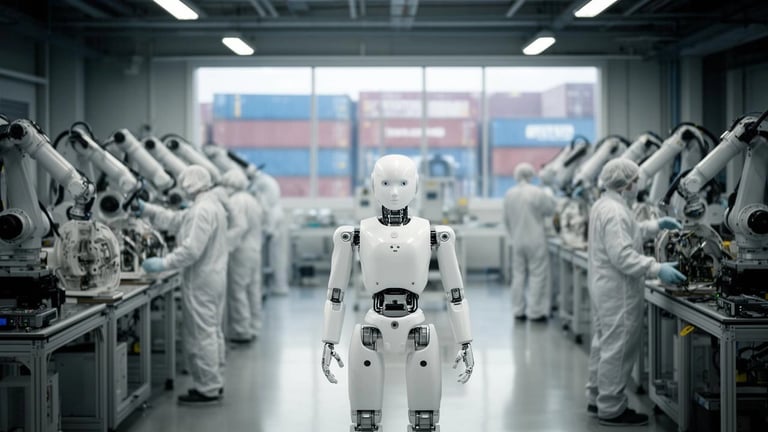

China is accelerating an AI-plus education push, with its AI-focused study tours and camps designed to give students hands-on experiences beyond textbooks and ready them for an AI-driven future.
Participants and organizers stress practical, real-world problem solving as students move from users to creators, designing AI-powered products that aim to benefit society.
This education effort fits a broader, multi-level national strategy to embed AI literacy and skills across schools, vocational training, and industry programs to speed AI-enabled industrial transformation.
The outlook remains uncertain: automation could stabilize manufacturing amid aging demographics, but speed of adoption and worker retraining will determine whether jobs are preserved or displaced.
A key threshold is cost per productive hour, not just upfront price, as robots become economically viable only when they undercut human labor after accounting for all owning costs.
Automation is poised to begin from cost advantages, with the tipping point arriving as robotic hourly costs undercut human labor across more roles.
China is a leading driver in this shift, where the cost-per-hour comparison will determine the pace at which humanoid robots replace or augment human workers.
These dynamics unfold within China's broader economic strategy and labor-market reforms, balancing innovation incentives with employment quality and stability concerns.
Examples like CRP Technology and Leapmotor show automation expanding in plants, where robotic arms take on repetitive tasks and factories employ tens of thousands of workers, prompting questions about displacement timelines.
Factories are integrating automation alongside human labor, sustaining high output while raising questions about the speed and extent of full automation.
Specific instances include CRP Technology developing robot arms and Leapmotor achieving near-total automation in stamping, welding, and painting.
AI-driven displacement is already visible, with workers such as Fei Zhaojun and about 160 colleagues in Beijing laid off amid AI considerations, highlighting broad job-security anxieties.
Summary based on 31 sources
Get a daily email with more AI stories
Sources
The Express Tribune • Aug 23, 2026
Chinese teenagers flock to tech frontline to touch the future amid AI study tour boom
BBC News • Aug 24, 2026
China's humanoid robots are stealing the show, but a quieter machine revolution is unfolding
BBC News • Aug 24, 2026
China's humanoid robots are stealing the show, but a quieter machine revolution is unfolding
The Washington Post • Aug 24, 2026
Workers in China worry over being replaced as they adapt to the growing impact of AI on jobs