USDT Adoption Surges in Emerging Markets as Hedge Against Currency Devaluation and Financial Restrictions
August 24, 2026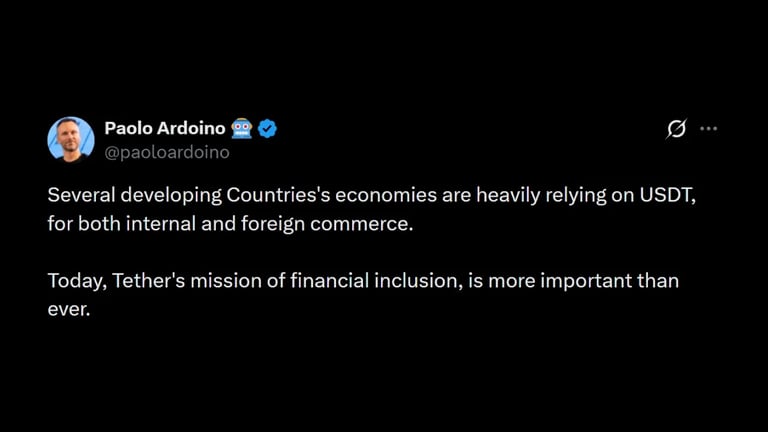

USDT adoption is expanding in Venezuela, Argentina, Bolivia, and Turkey, where it is used to bypass currency devaluation, dollar shortages, and financial restrictions, rather than solely for trading.
In Argentina, USDT settles cross-border invoices and serves as a parallel store of value amid capital controls and exchange-rate gaps, enabling holdings outside the formal banking system.
Emerging economies increasingly rely on USDT for internal transactions and as a hedge against devaluing local currencies, with reports from Africa and Latin America illustrating the trend.
The broader narrative ties to on-chain dollarization and tokenization, suggesting faster settlement and fewer intermediaries, though regulatory scrutiny and potential reserve-audit demands remain.
Regulatory hurdles loom as stablecoins grow in emerging markets, requiring policymakers to balance innovation with compliance, transparency, and user protection.
Trade settlements and cross-border flows are more meaningful indicators of stablecoin adoption in these markets than retail trading volumes.
Trade settlements using USDT are an on-ramp for dollar-denominated value, reflecting a shift to moving real-world assets on-chain to speed settlement and cut intermediaries.
Bolivia is evaluating incorporating USDT into its financial system after crypto regulation changes, with officials stressing the need to prevent money laundering and illicit use.
The rapid USDT uptake offers lessons for U.S. Web3 startups, highlighting opportunities to provide crypto-based solutions to currency risk and underserved populations.
Ardoino emphasizes that Tether’s mission of financial inclusion is increasingly vital amid these developments.
Stablecoins like USDT are transforming cross-border transactions by offering lower costs and faster transfers than traditional banking, crucial in markets with restrictive or costly financial infrastructure.
Chainalysis data show Latin America rapidly adopting crypto, with about $1.5 trillion in activity from mid-2022 to mid-2025, signaling a shift toward digital assets amid instability.
Summary based on 4 sources
Get a daily email with more Crypto stories
Sources

Bitcoin News • Aug 24, 2026
Tether CEO Says USDT Drives Trade Across Emerging Markets
CryptoRank • Aug 24, 2026
Tether CEO Sees USDT Settling Trade and Hedging Inflation in Developing Markets
blockchainreporter • Aug 24, 2026
Tether CEO Sees USDT Settling Trade And Hedging Inflation In Developing Markets
OneSafe • Aug 24, 2026
USDT Is Reshaping Financial Realities in Latin America