NASA Develops 'String of Pearls' Strategy for Safe Lunar Space Traffic Management
August 25, 2026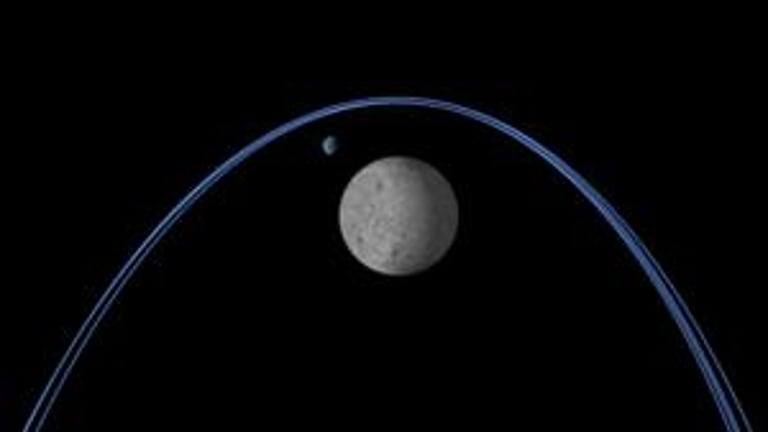

A 'string of pearls' concept, built from thousands of simulations, spaces arriving vehicles at calculated intervals ahead of or behind Gateway to form a managed traffic relay rather than independent orbits.
If forecasts hold, the flight cadence around cislunar space will increase dramatically, marking a major shift in space exploration operations.
The Acta Astronautica proposals outline a technical framework for arrivals, departures, and orbital holding patterns near Gateway, though not enforceable air-traffic regulations.
SpaceX recently completed a full-duration static-fire test of the Super Heavy booster, validating power and durability for future weekly flights.
The plan aims to enhance mission resilience by diversifying providers and boosting innovation through competition and collaboration with multiple industry partners.
The Artemis program is advancing with Artemis III planned for 2027 to test lunar landing technologies and Artemis IV targeted for early 2028 to return astronauts to the Moon, signaling a staged pathway to deep-space exploration.
Gateway is envisioned as humanity’s first spaceport, serving as a hub for Orion crew capsules, cargo vehicles, and lunar landers to support the Artemis program.
AWS delivers cloud-based mission support for Artemis, with GovCloud enabling thousands of trajectory simulations and its global network supporting live video feeds via laser communications during missions.
NASA’s Gateway resides in NRHO, an elongated, egg-shaped lunar orbit that brings it within about 1,000 miles of the Moon’s north pole and roughly 40,000 miles past the south pole, creating a fuel-efficient yet complex transit corridor requiring precise calculations.
Studies show modest increases in station-keeping maneuvers can greatly improve predictability and safety for docking with only modest fuel penalties, aiding mission scheduling.
Key challenges include technical hurdles, budget constraints, and the need for robust life support, radiation protection, and psychological support for long-duration missions, with ongoing iteration as technologies mature.
Partnerships are expected to shape future missions, including Mars exploration, and may guide international collaboration in space exploration.
Summary based on 12 sources
Get a daily email with more Science stories
Sources
EurekAlert! • Aug 24, 2026
‘Now boarding’ … 240,000 miles from Earth, at the moon’s first airport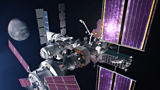
Texas A&M Stories • Aug 24, 2026
‘Now boarding’ … 240,000 miles from Earth, at the moon’s first airport – Texas A&M Stories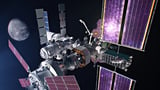
Popular Science • Aug 25, 2026
How NASA is prepping for lunar traffic jams