India Boosts Local Manufacturing for Apple, Aims for Self-Reliant Tech Ecosystem
August 26, 2026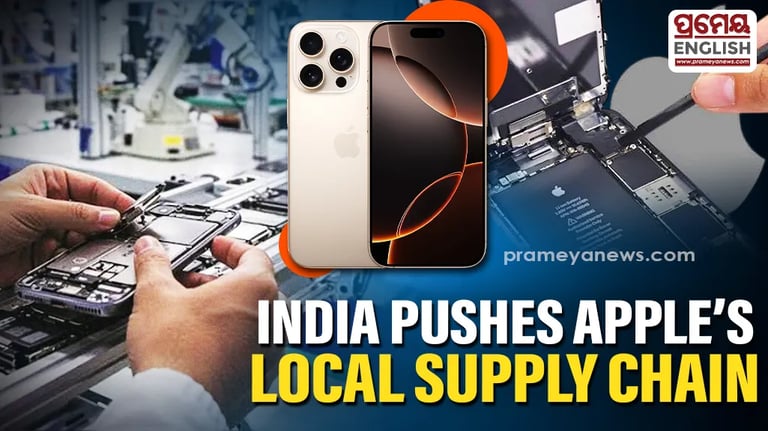

India is accelerating local component manufacturing for Apple and its suppliers, aiming to deepen its role in Apple’s global supply chain before expanding to final assembly of devices like iPad, MacBook, and Apple Watch.
A broad mix of Indian exporters — including Foxconn, Tata Electronics, Pegatron (Tata-owned), Motherson, Salcomp, Jabil, TRIL Bangalore, Aequs, and Yuzhan Technology — are participating in supplying to China and contributing to the ecosystem.
The Electronics Components Manufacturing Scheme (ECMS) is being used to push local production and value addition in components for domestic use and export.
The reporting timeline is anchored to late August 2026, with a leadership transition planned for September 2026.
The piece credits Surajeet Das Gupta as the author and situates the report within Business Standard coverage.
Since 2014, India moved from importing about 80% of its smartphone parts to building a domestic ecosystem through policy measures like PMP and PLI, shifting focus from assembly to component fabrication and design.
Efforts to build the ecosystem show domestic value addition rising from 2–5% in 2014 to 15–20% by 2020, with total electronics production climbing from ₹1.9 lakh crore in FY2015 to about ₹11.3 lakh crore in FY2025.
Policy discussions emphasize creating a strong base of local component makers to drive job creation, technology transfer, and reduced import reliance, not just final assembly.
Government incentives aim to close cost gaps with China and support ambitious goals, including potentially reaching $500 billion in annual electronics production by 2030 and elevating India to a premier global manufacturing hub by 2047.
Tim Cook’s past India engagement and ongoing leadership transitions are viewed as shaping the future direction of Apple’s India strategy.
Government teams are conducting ongoing consultations with vendors to address logistical hurdles and speed up regulatory clearances for component units.
India offers strategic advantages such as lower reciprocal electronics tariffs (around 18%) and attractive PLI subsidies tied to incremental production and exports.
Summary based on 12 sources
Get a daily email with more Tech stories
Sources

Business Today • Aug 26, 2026
Apple may manufacture iPads, MacBooks in India, but local components take priority
The Week • Aug 26, 2026
Why is the Centre pushing Apple for component manufacturing before product assembly?