Blood Falls' Marine Microbes Reveal Antarctica's Ancient Seawater Origins and Climate Resilience
August 3, 2026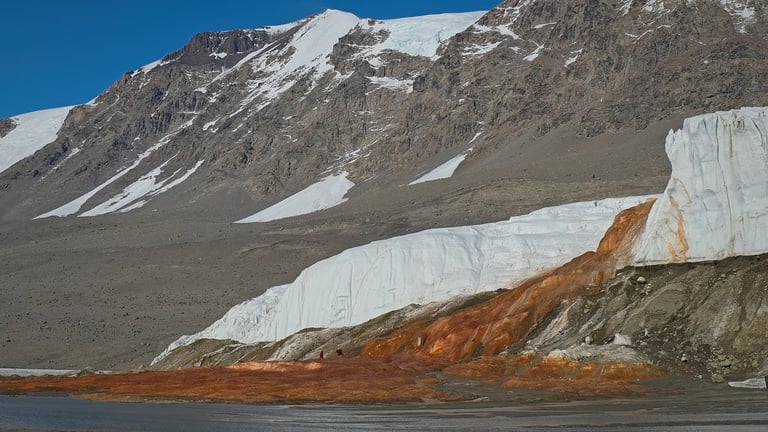

Blood Falls serves as a rare natural archive for studying past environmental change and polar vulnerability, while hosting a living, ancient lineage beneath the glacier.
Findings reinforce that ancient seawater inundated Taylor Valley during warmer periods, became trapped under advancing ice, and shaped the current subglacial brine system fueling Blood Falls.
A groundbreaking Nature Geoscience study reveals a distinct marine-associated microbial community in Blood Falls’ water, indicating a marine origin for the subglacial system beneath Taylor Glacier.
Compared with nearby freshwater and terrestrial sites, Blood Falls’ terminus hosts almost all marine-linked microorganisms and shares more marine-related eukaryotic species with adjacent samples, pointing to an ancient seawater origin.
Diverse eukaryotic species are present in the brine-fed waters, closely related to marine microbes rather than freshwater ones, despite the site’s distance from the ocean.
Researchers propose the hypersaline brine could serve as a refugium through ice ages, allowing organisms to persist in dormant states until conditions permit revival.
Beyond biology, the work helps reconstruct Antarctica’s ancient history by tracing when seawater was trapped under advancing ice during past glacial cycles.
The findings suggest past seawater incursions during warmer periods and current subglacial ecosystems, offering clues about life’s adaptability in extreme environments.
Future work may use the microbial community as a clock to pinpoint when subglacial water became isolated, clarifying timing of flooding and isolation events.
The study seeks to understand how such ecosystems endure through geological and climatic shifts and raises questions about phytoplankton behavior in iron-rich settings.
mRNA analyses show the relic marine community persists through environmental changes, indicating resilience and potential insights into ancient flooding.
The research underscores the unexpected continuity of life, with a diverse marine-associated microbial community persisting in a polar desert and offering clues about past climate and subglacial hydrology.
Summary based on 5 sources
Get a daily email with more Science stories
Sources
Gizmodo • Aug 3, 2026
Ancient Life Discovered in Antarctica’s ‘Blood Falls’ May Finally Reveal Its Origins
Scientific American • Aug 3, 2026
How Antarctica's Blood Falls came to be
Popular Science • Aug 3, 2026
Antarctica’s Blood Falls teems life from unexpected source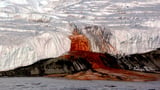
ScienceAlert • Aug 3, 2026
'Unique Refuge': A Lost Sea May Still Be Alive Beneath Antarctica's Eerie Blood Falls