NASA Unveils Cutting-Edge Wind Tunnel for Future Aircraft and Spacecraft Testing
August 3, 2026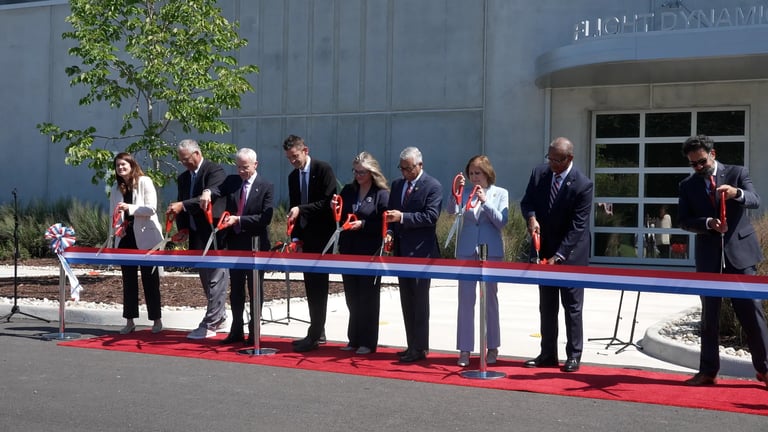


Officials describe the facility as essential for testing safety and performance across aircraft, rockets, space vehicles, X‑planes, drones, and autonomous flight systems, supporting a wide range of missions.
NASA opened its new wind tunnel at Langley Research Center in Hampton, Virginia, to test safety and performance for future aircraft, rockets, and space exploration vehicles.
As NASA’s first major new wind tunnel in more than four decades, it will advance aviation, X‑plane development, drone research, and spacecraft technology.
The tunnel was built in partnership with the General Services Administration, replacing aging facilities and modernizing Langley’s infrastructure while cutting maintenance costs.
It achieves a top airspeed of 117 mph, enabling free‑flight tests of heavier scale models and higher-altitude simulations for more accurate data.
The 25,000‑square‑foot facility features a 20‑foot diameter vertical test section, four 750‑horsepower motors, eight‑blade 14‑foot‑diameter fans, and wind speeds up to 117 mph.
The building houses a vertical wind tunnel with improved airflow, modern digital systems, and flexible testing capabilities.
The facility supports free‑flight and mounted testing of scale models across atmospheric flight, enabling studies from airplanes to returning space capsules.
Its higher‑speed, more stressful airflow testing—nearly ten times greater than before—facilitates missions for Venus, Titan, the Moon, Mars, and Earth‑return scenarios.
The project is managed under NASA’s Aerosciences Evaluation and Test Capabilities portfolio within the Aeronautics Division of the Research and Technology Mission Directorate.
Leadership notes: Langley’s director described transformative research under one roof; the facility manager stated it will be involved in every future space mission; the technical lead highlighted wind-speed capabilities as a major advance.
The wind tunnel strengthens collaboration between aeronautics and space exploration, supporting autonomous flight, drones, commercial and military aircraft, X‑planes, and Artemis/Mars entry, descent, and landing studies.
Summary based on 2 sources
Get a daily email with more World News stories
Sources
NASA • Jul 31, 2026
NASA Opens New Flight Dynamics Research Facility in Virginia - NASA
Fox News • Aug 3, 2026
NASA opens first major new wind tunnel in more than 40 years at Virginia facility