Yale-Harvard ARIA Initiative Maps Autism Development for Early Detection and Precision Interventions
August 31, 2026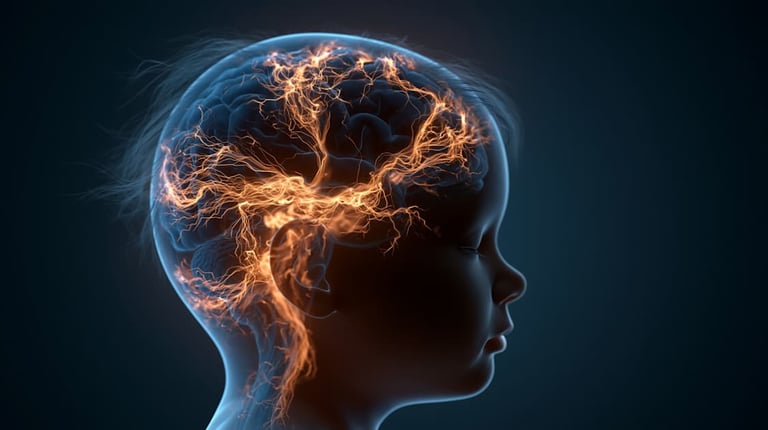

A multi-pillar ARIA initiative is mapping the developing human brain and autism divergences, spanning high-resolution brain wiring, cellular/molecular models, patient-derived organoids, and AI to predict interventions and prioritize targets.
The effort unites neural, cellular, genetic, and molecular perspectives across four coordinated projects to build an interconnected view of autism development.
Yale leaders say the investment will catalyze earlier detection, clearer biomarkers, and more precise interventions for autism, benefiting patients and families beyond Yale.
Autism prevalence is cited at about 1 in 31 American children under eight, underscoring the societal importance of accelerated discovery within ARIA’s network of hubs and sites.
At Yale, Sestan will oversee building a detailed brain connectome from human and primate tissues and conduct single-cell genomics to map gene expression across development.
A long-term objective is to enable in silico simulations of drug responses in individuals with autism to improve understanding and guide therapies.
The grant expands prior ARIA-funded collaboration at Yale, integrating development biology, genetics, neural recording, AI, and engineering to translate findings into patient benefits.
This Yale ARIA award, tied with a previous roughly $27.7 million grant and aligned with Murat Güneel’s brain-model efforts, aims for synergy within Yale’s collaborative framework.
Arlotta’s lab will create about 150 patient-derived stem cell lines to generate brain organoids, or 'avatars,' to study molecular and activity differences and share these lines with ARIA researchers.
Organoid-based studies will use patient-derived models to examine how autism-linked genetic states affect development and connect to ARIA’s IMPACT network and clinical phenotyping.
Marinka Zitnik’s AI pillar will build multimodal, cellular-resolution models to identify biomarkers, prioritize targets, and simulate interventions, aiming for a virtual cell platform that forecasts outcomes.
Yale and Harvard researchers, led by Nenad Sestan and Paola Arlotta, have secured a substantial ARIA grant to map the developing brain and build models that enable earlier detection and targeted interventions.
Summary based on 3 sources
Get a daily email with more Science stories
Sources

Yale School of Medicine • Aug 31, 2026
Yale School of Medicine Awarded a Nearly $25 Million Grant to Map the Developing Brain and Advance Autism Rese
Harvard FAS • Aug 31, 2026
Paola Arlotta awarded ARIA grant for autism research