New Carnivorous Plant Discovered, Confirms Darwin's Century-Old Hypothesis on Saxifraga
August 4, 2026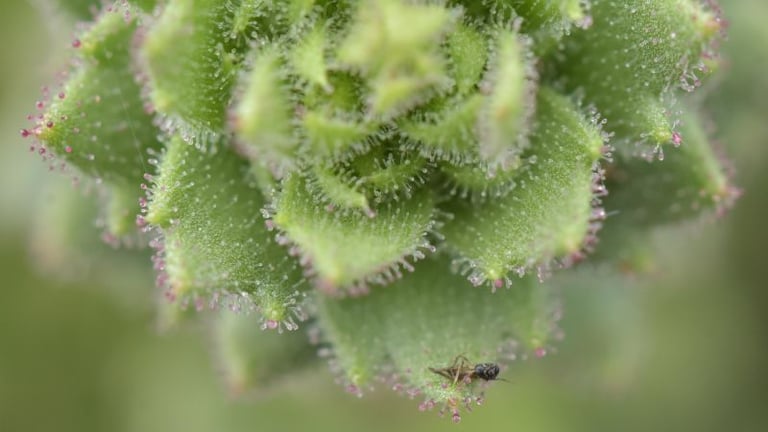

A newly identified carnivorous plant species, Saxifraga candelabrum, actively attracts, captures, digests, and absorbs nutrients from insects, providing definitive evidence of carnivory in Saxifraga and supporting Darwin’s century-old hypothesis.
This species grows at high elevations in the Qinghai-Tibet Plateau and Hengduan Mountains, marking an alpine carnivorous plant scenario and expanding the known environments where carnivory occurs in flowering plants.
The discovery reinforces Darwin’s long-standing ideas about carnivory in Saxifraga and suggests the Qinghai-Tibet Plateau could be a hotspot for undiscovered plant adaptations.
Independent experts, including Mark Chase and Qianshi Lin, call the finding significant and note its potential for agricultural use through transferring carnivory-related genes to crops as natural pest controls.
Researchers describe the prey-to-predator transition as a striking adaptive innovation, while acknowledging that the exact evolutionary pathways remain unclear and merit further study.
Experts stress that carnivory coexists with pollination, as larger pollinators are not trapped, allowing feeding and reproduction to proceed.
Field tests show the plant emits attractive scents to lure prey, indicating an active prey-attraction strategy rather than incidental capture.
The broader impact highlights ongoing botanical discovery, diversity of carnivory, and the need to reassess assumptions about plant nutrition and ecology.
Scientists Sun, Soltis, and Myers emphasize the novelty and significance, noting that some plants once thought to be purely sticky may digest, with carnivory likely evolving convergently across multiple families.
Lead researcher Hang Sun notes that Saxifraga candelabrum’s simple traps reveal a wider spectrum of carnivory strategies among plants, challenging stereotypes about carnivorous plants.
The work extends Darwin’s observational approach, validating his suspicions with modern methods and underscoring the enduring value of early natural history insights.
Researchers conducted feeding experiments with nitrogen-rich prey and traced nitrogen uptake to prove the plant absorbs nutrients from captured insects, not just traps them.
Summary based on 5 sources
Get a daily email with more Science stories
Sources
Gizmodo • Aug 4, 2026
This Plant Has Been Hiding a Killer Secret. Darwin Called It 150 Years Ago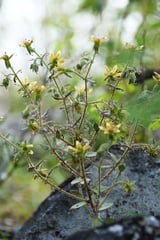
Yahoo News • Aug 4, 2026
Mountain flower from China joins the world's carnivorous plant club
New Scientist • Aug 4, 2026
Darwin proved right about gnat-trapping carnivorous plant