Google DeepMind's AI Weather Forecasting Model Open-Sourced: Revolutionizing Cyclone Prediction and Climate Adaptation
August 6, 2026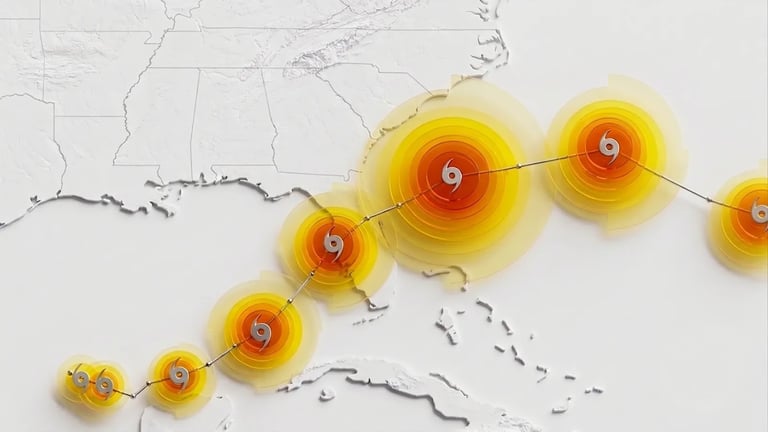


WeatherNext, an AI forecasting system from Google DeepMind and Google Research, can predict tropical cyclone track, intensity, and wind structure in a single model and has been open-sourced as WeatherNext 2, WeatherNext Cyclones, and WeatherNext 2-mini on GitHub, with results published in Nature.
The model delivers an average lead time of more than a day, with three-day forecasts matching two-day performance from earlier systems, marking a significant advance in meteorology.
Open-source access to WeatherNext 2, WeatherNext Cyclones, WeatherNext 2-mini, and related tools like Weather Lab is being provided to researchers, forecasters, and nonprofits to build on the technology.
Caveats exist: while forecasting accuracy improved, turning predictions into reliable smart-contract executions in DeFi requires overcoming oracle plumbing, risk management, and liquidity challenges.
A single 15-day forecast runs in under a minute on a TPU, and widespread adoption will depend on expert integration and operational workflows rather than compute limits.
The shift to AI-driven weather forecasting aligns with AI and blockchain convergence, with institutional validation from federal agencies adding credibility, but practical adoption hinges on robust oracle infrastructure, risk modeling, and market liquidity.
Real-time, high-resolution weather data from WeatherNext could enhance crypto prediction markets and parametric insurance by improving event-trigger accuracy, with open access enabling direct integration or derivative data products without enterprise licenses.
Forecasters will integrate WeatherNext with other models and human expertise; it supplements but does not replace professional judgment or consideration of real-world impacts.
Open sourcing accelerates research and collaboration, while the real test will come during the upcoming storm season as ensembles are stress-tested in real conditions.
WeatherNext now generates a large ensemble, producing roughly 1,000 scenarios per storm to better represent uncertainty and tail risks, up from about 50.
The authors emphasize ongoing collaboration with meteorological agencies to advance AI-assisted forecasting and help communities adapt to climate change, while official forecasts should come from local services.
WeatherNext uses Functional Generative Networks to create probabilistic ensembles (up to 1,000 members) and can generate a 15-day forecast in under a minute on a TPU, enabling rapid assessment of probability distributions and tail risks.
Summary based on 7 sources
Get a daily email with more Tech stories
Sources
Google DeepMind • Aug 6, 2026
WeatherNext: AI model achieves breakthrough in forecasting cyclones
WIRED • Aug 6, 2026
DeepMind Says Its AI Can Predict Hurricanes Earlier Than Everyone Else
Engadget • Aug 6, 2026
Google Open-Sources An AI Model It Says Can Help With Earlier Hurricane Warnings